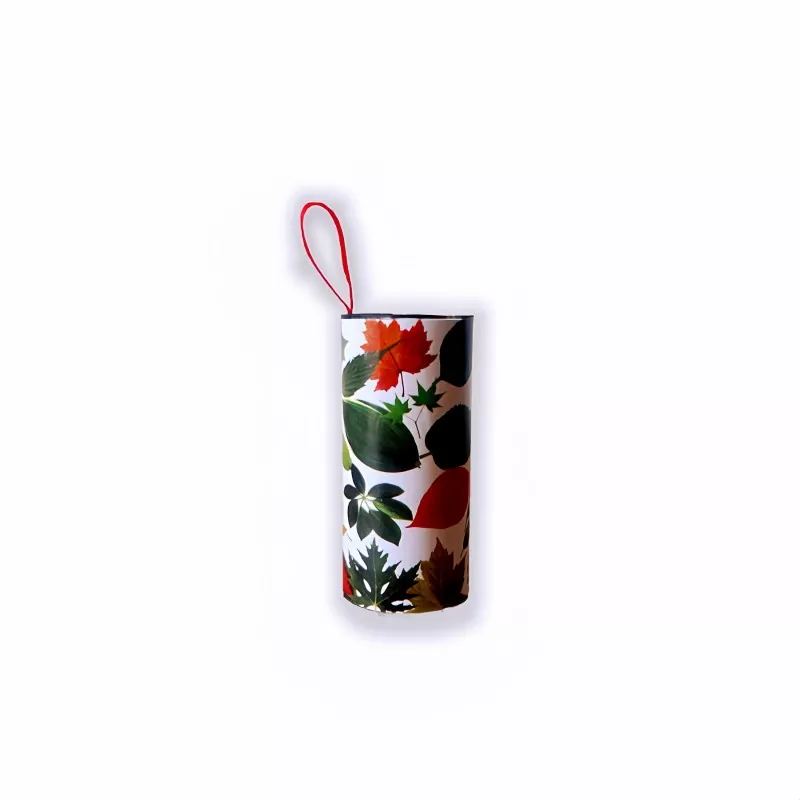
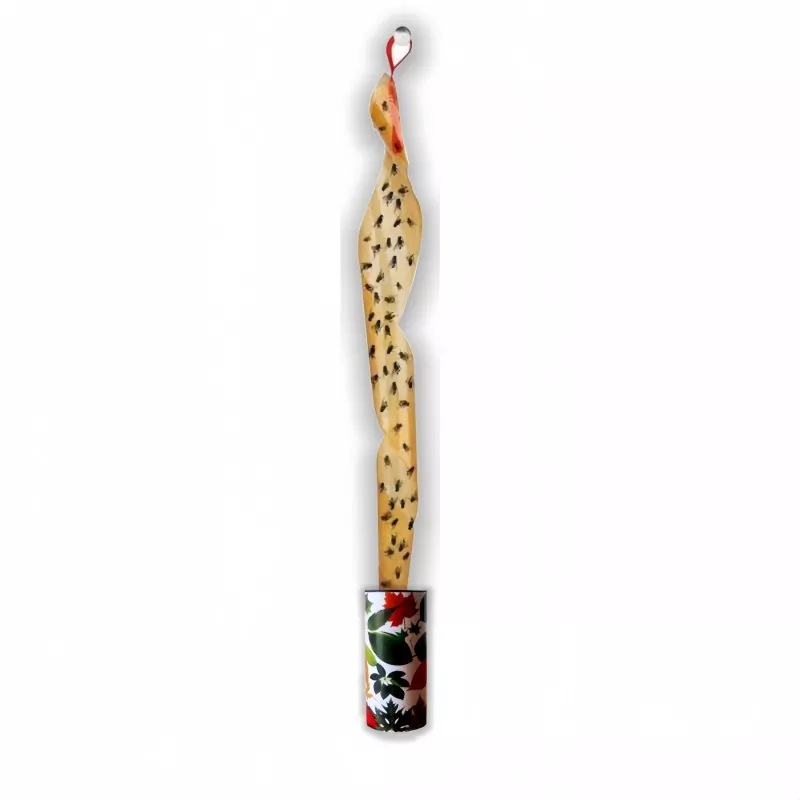
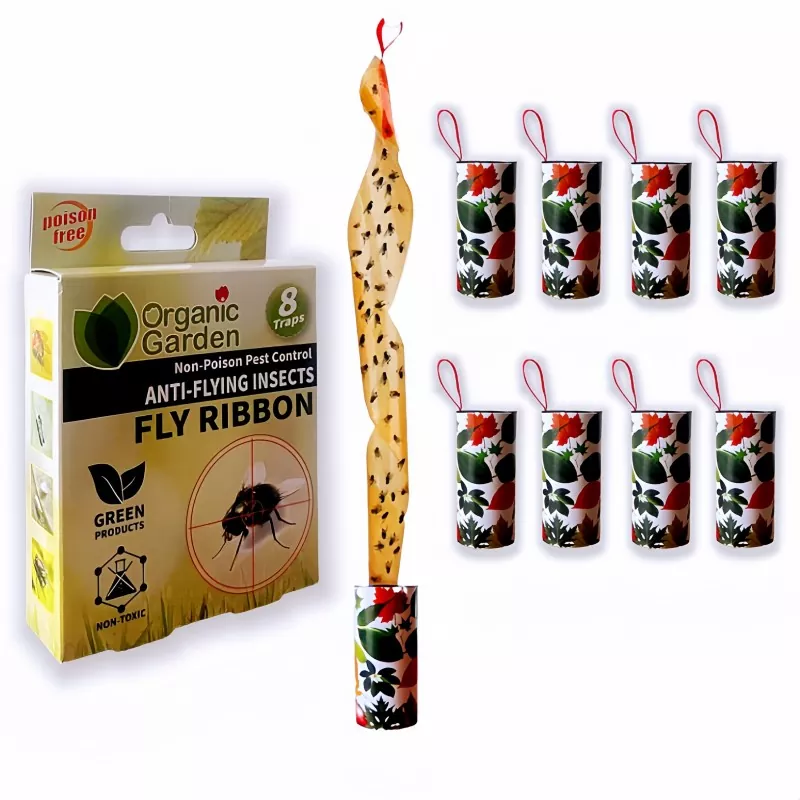
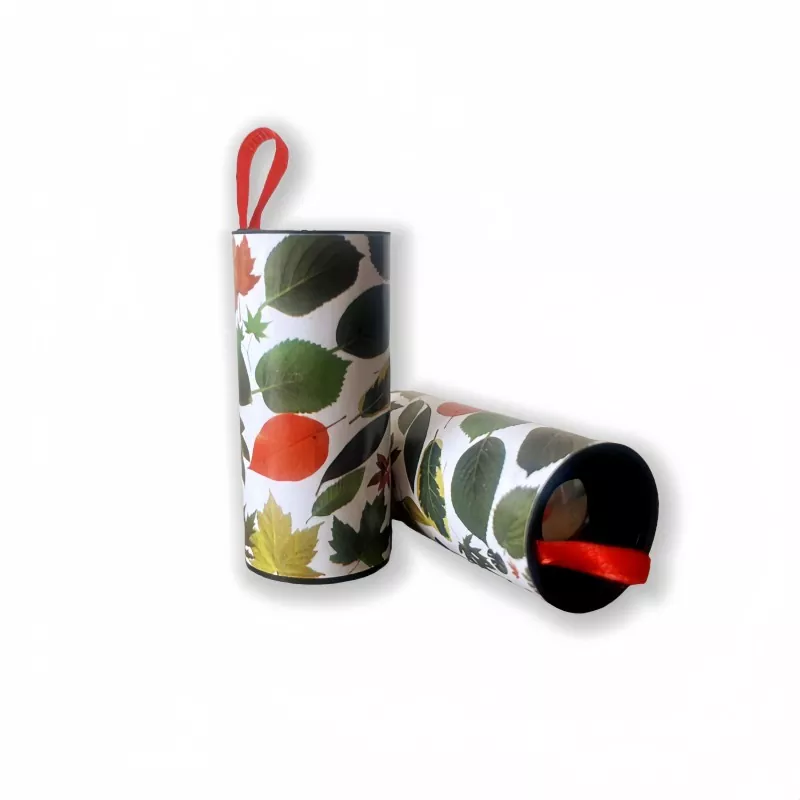
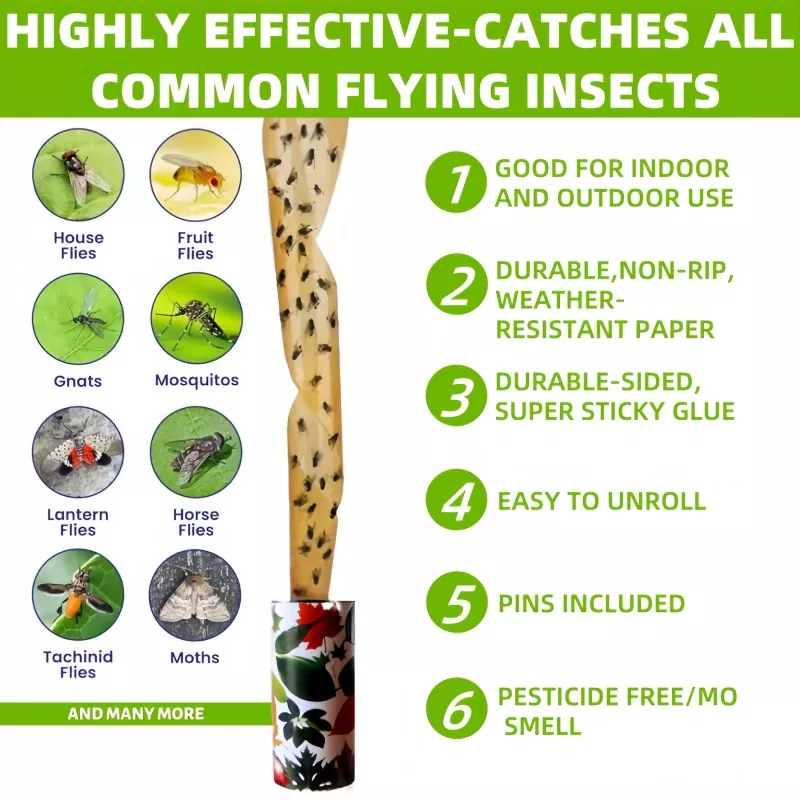
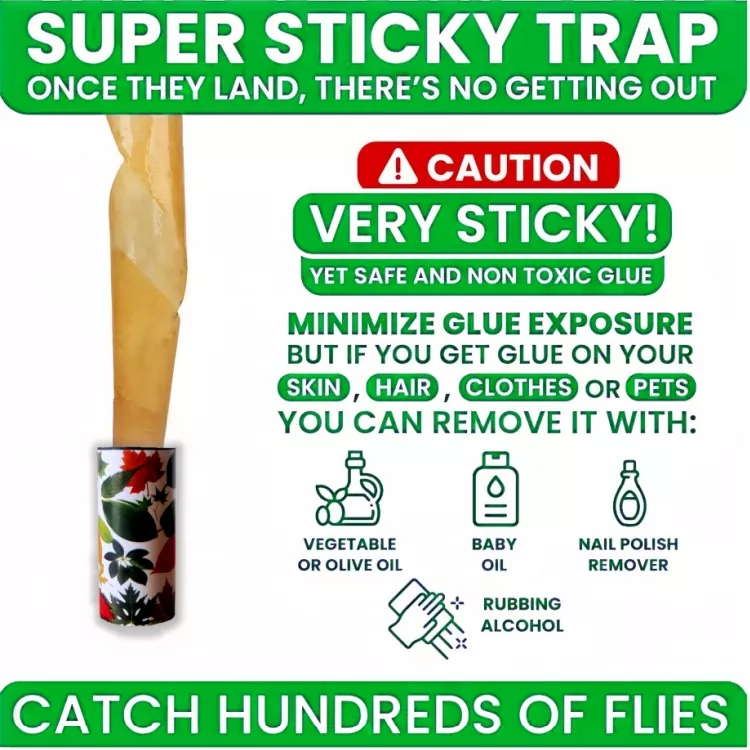
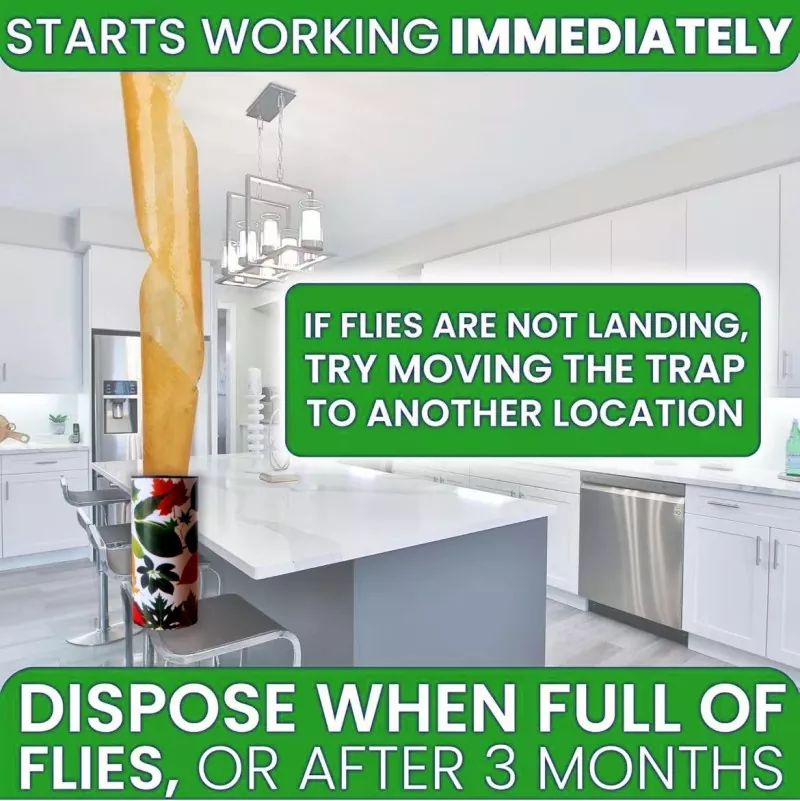
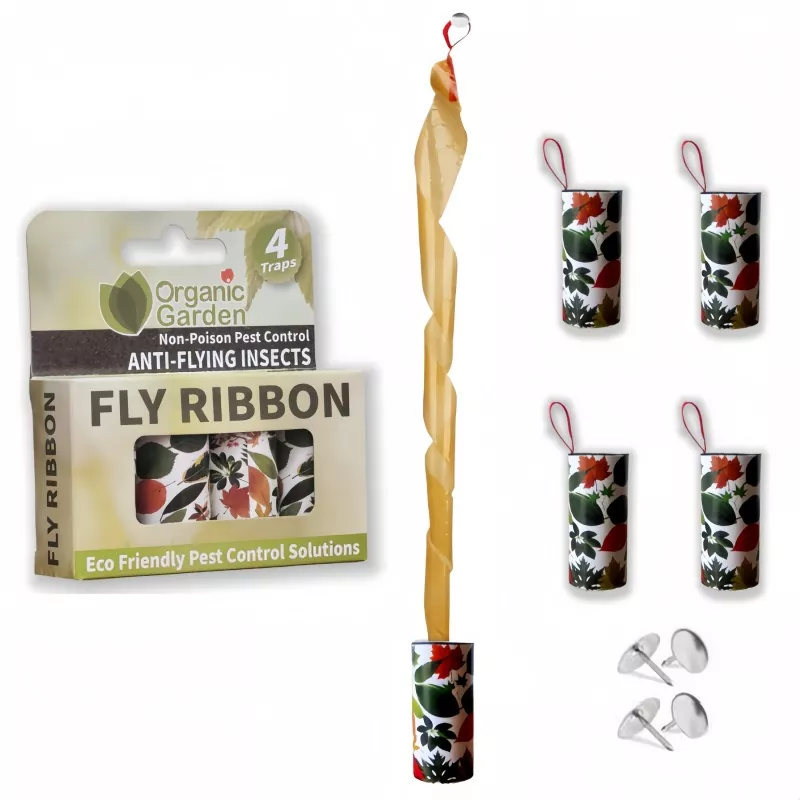
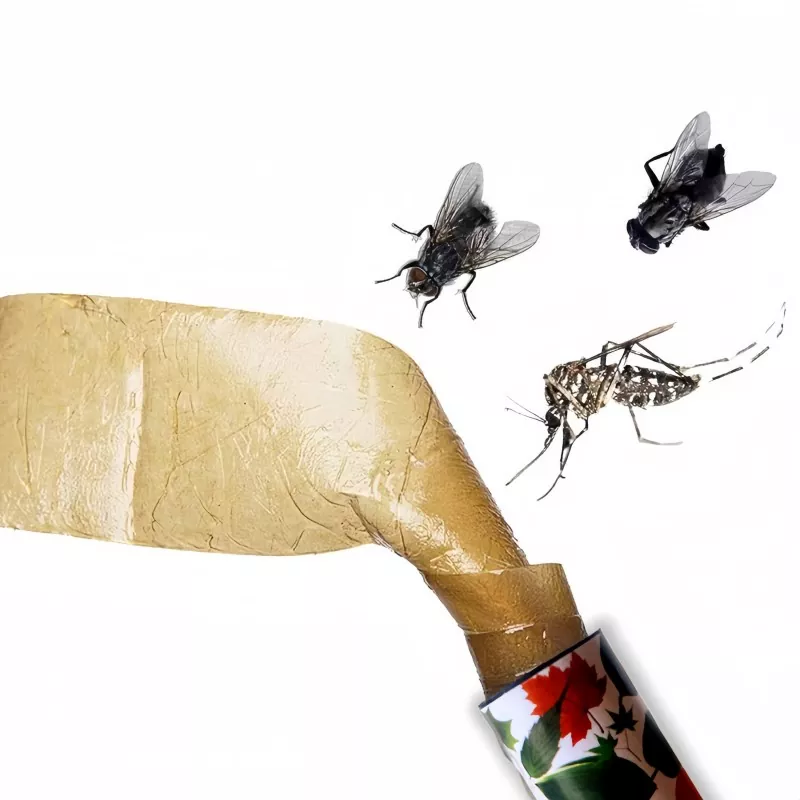
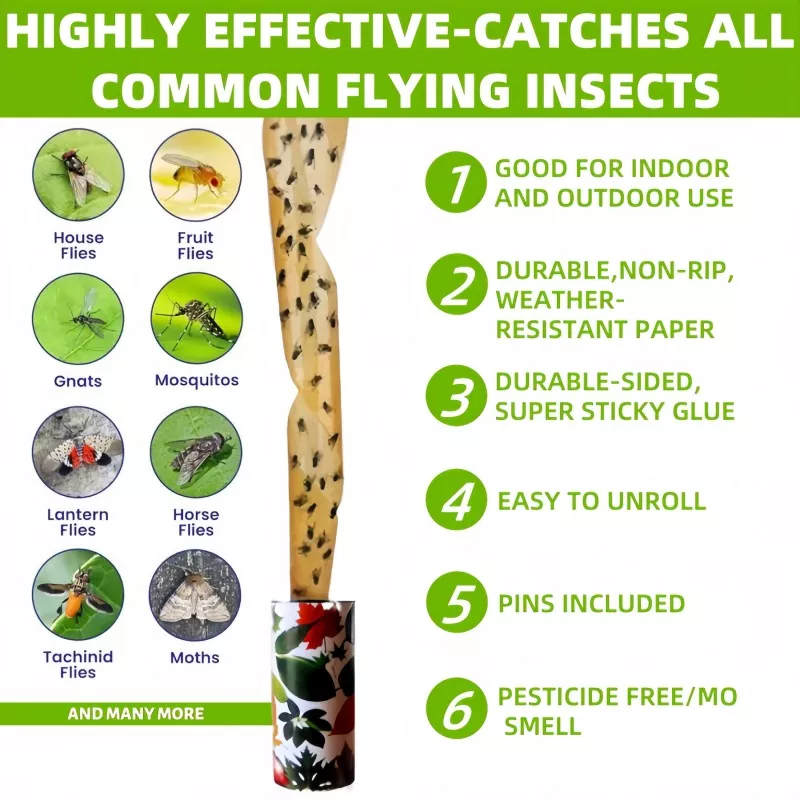
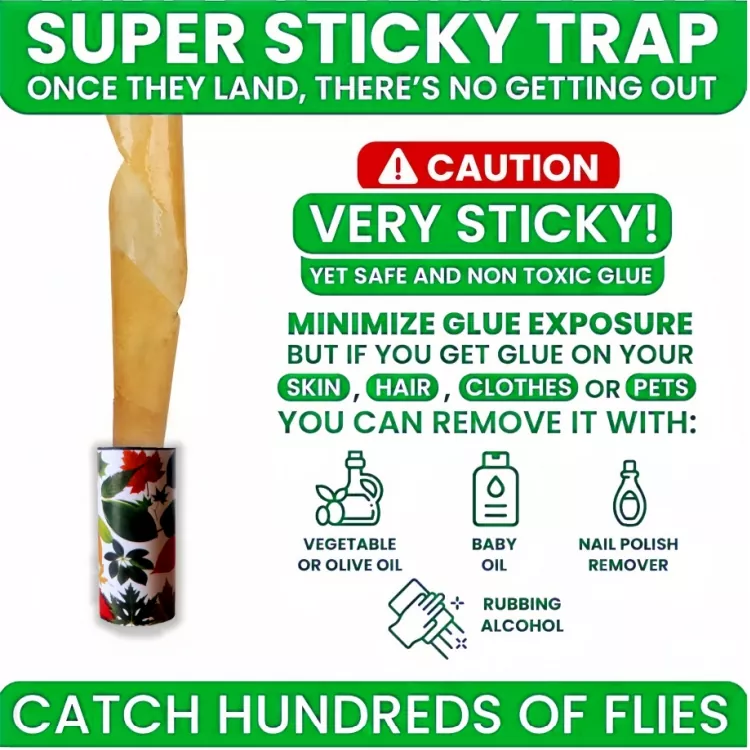
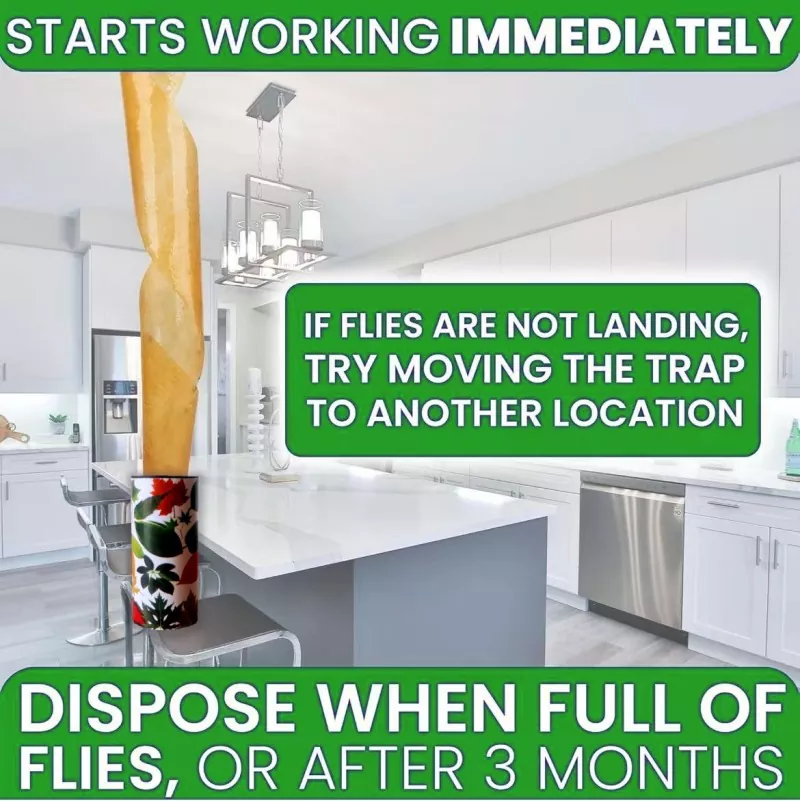
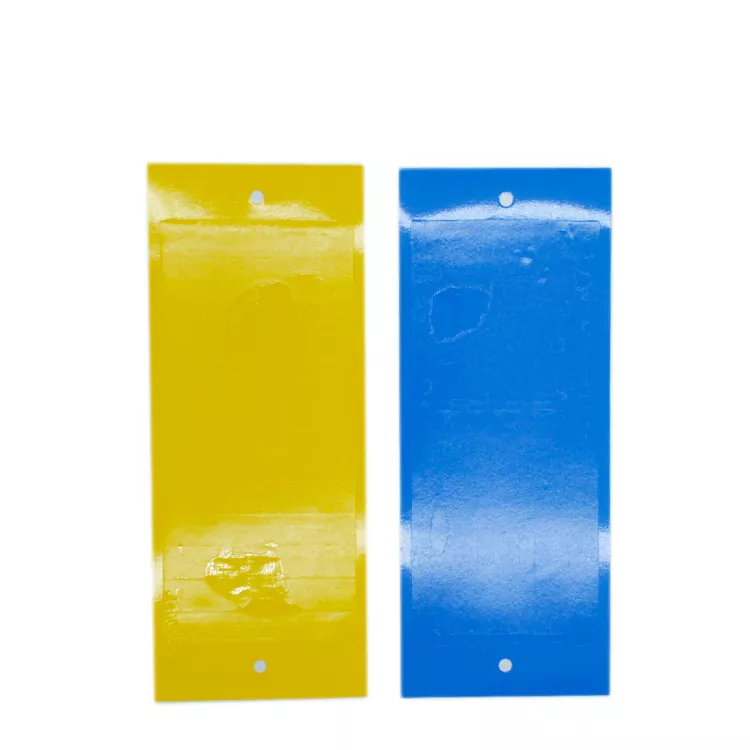
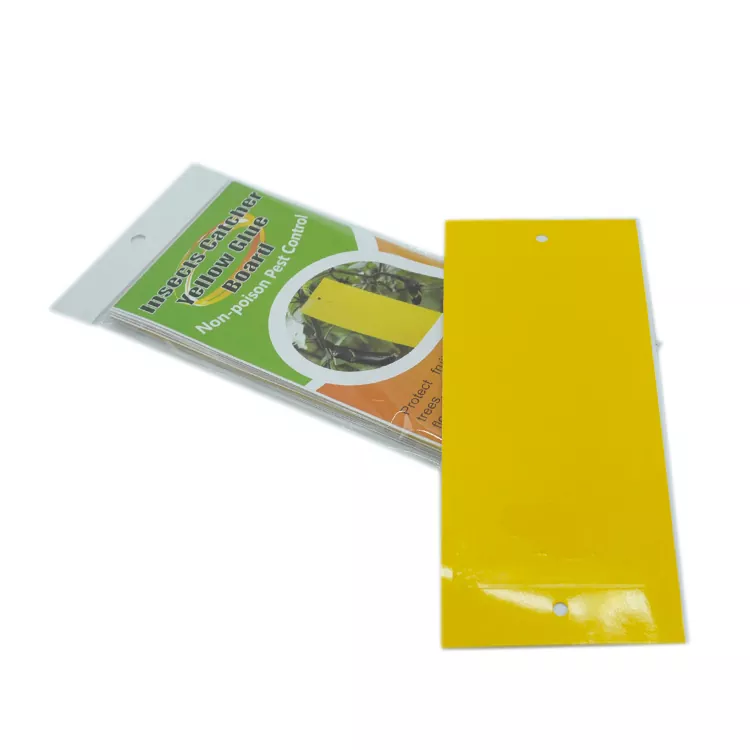
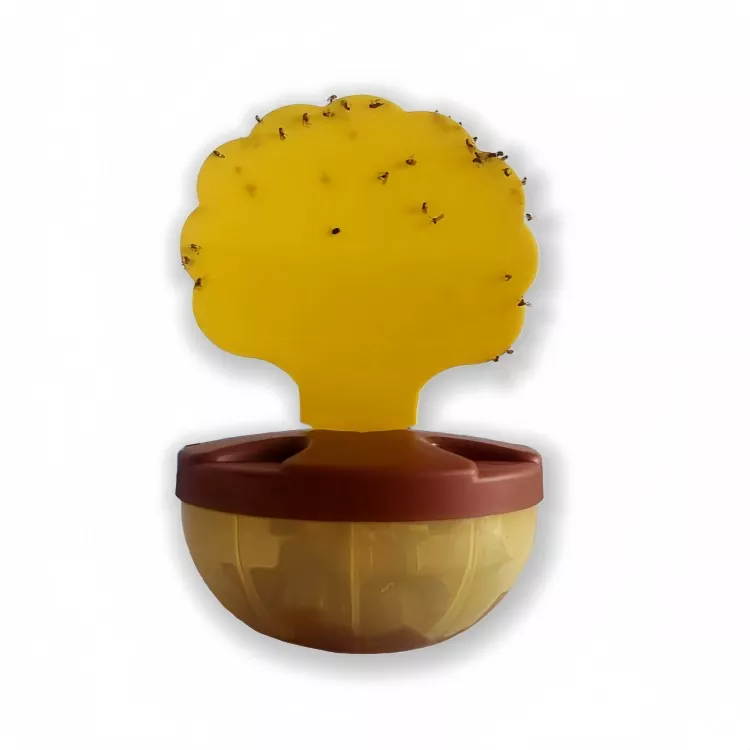
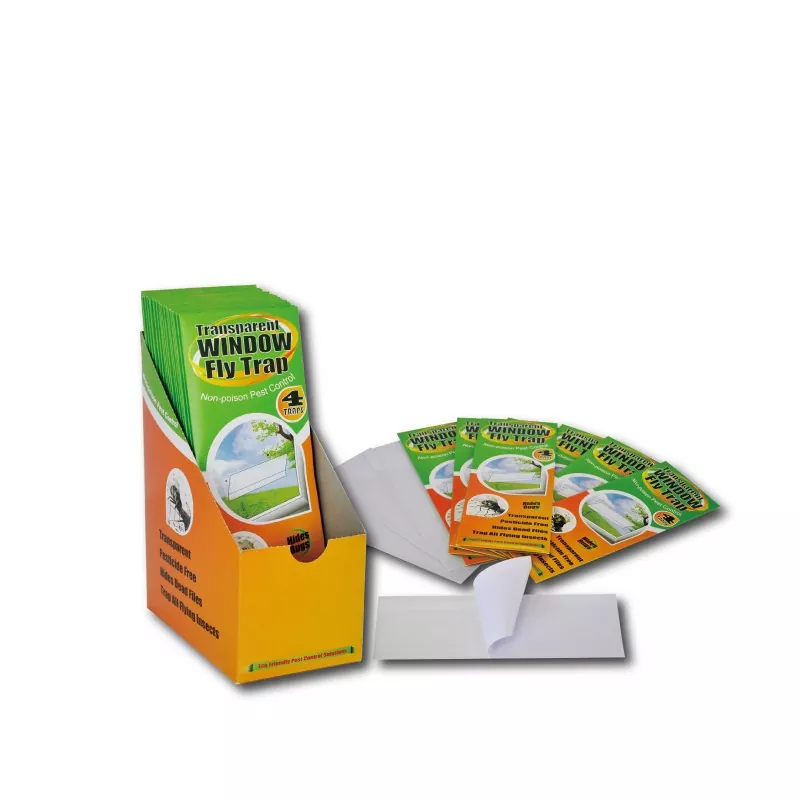
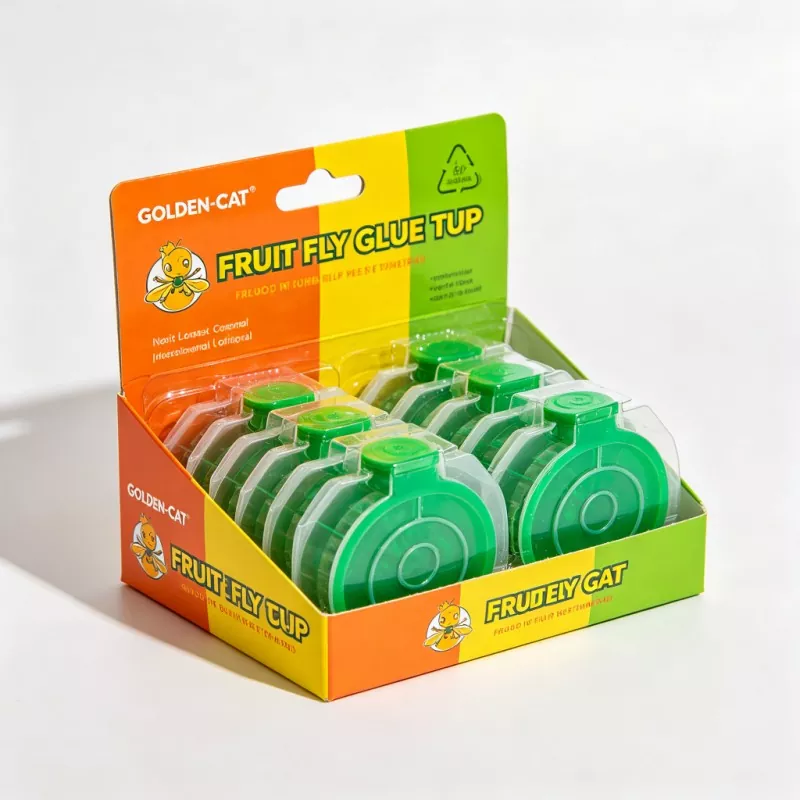
GOLDEN-CAT Fly Glue Ribbon Trap is a classic, cost-effective flying insect control solution designed for high-volume fly capture in commercial, agricultural and industrial environments. Featuring a long, wide adhesive strip with ultra-strong glue, this hanging fly ribbon provides maximum surface area for trapping flies, mosquitoes, gnats and other flying pests. The proven yellow color attracts flies naturally, while the durable paper base ensures long-lasting performance even in challenging conditions.
A kraft Fly Glue Ribbon Trap coated on both faces with pressure-sensitive adhesive, hung from a beam or ceiling hook for fly control in barns, loading bays, waste rooms and stockrooms. Supplied four to a cardboard tube and made by Dalian Golden-Cat Rodenticide Co., Ltd. for agricultural distributors, facility suppliers, retail buyers and OEM customers. Length, width, adhesive weight and tube print can be specified before production. Product images, an adhesive composition statement and sample ribbons are available on request.
Ribbon Specification
Brand
GOLDEN-CAT
Product
Fly Glue Ribbon Trap, hanging type
Capture method
Yellow visual attraction plus pressure-sensitive adhesive, no pesticide active ingredient
Base
Kraft paper strip
Color
Yellow
Dimensions
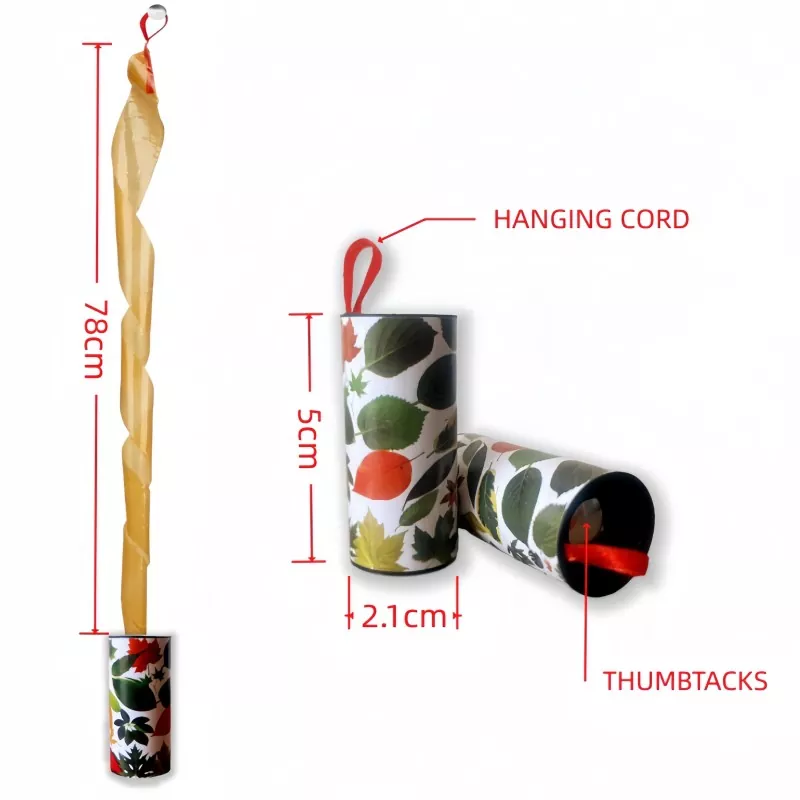
60 × 5 cm / 80 × 6 cm
Adhesive faces
Double-sided, release paper on both faces
Fixing
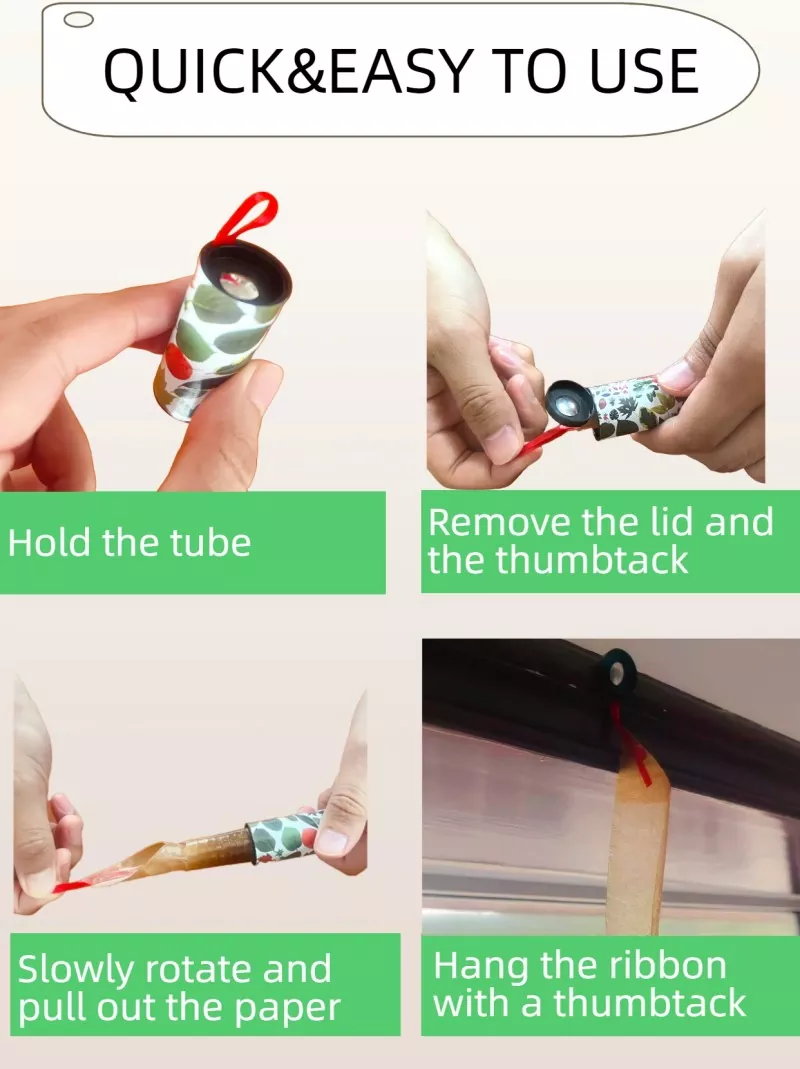
Thumbtack or pin through the top eyelet
Retail pack
4 pcs per cardboard tube with hang hole
Export carton
50 tubes, 200 pcs, approx. 50 × 35 × 30 cm
Field life
Up to 12 weeks indoors; 4 to 6 weeks in dusty or hot positions
A single ribbon in a single room is simple. A building with a barn, a feed store, a loading bay and a waste room is a different problem, because the fly pressure and the replacement cycle are not the same in each area.
The practical approach is to divide the site into zones by fly source, not by floor area.
Source zones. Waste rooms, drains, livestock pens, feed mixing areas and loading docks. These carry the highest fly pressure and the shortest ribbon life. Place ribbons close to the source, at 2 to 3 m spacing, and expect to replace them every 4 to 6 weeks in warm weather.
Transit zones. Corridors, doorways and aisles between the source and the rest of the building. Flies move through these areas rather than breeding in them. One ribbon per 10 to 15 m², checked monthly, is usually enough.
Holding zones. Offices, retail floors and storage areas away from the source. Fly pressure is low. A small number of ribbons near entry doors catches the insects that get through, and replacement is infrequent.
Ordering by zone rather than by total floor area avoids two common errors: too few ribbons at the source, and too many in areas where flies rarely go.
Which Fly Moves at Which Height
The 1.5 to 2.5 m hanging range is a general figure. Within that range, different flies occupy different layers, and the ribbon catches more when it sits in the layer where the local population is active.
· House fly and blow fly. Rest on beams, wires, lamp fittings and the upper part of walls. A ribbon hung at 2 to 2.5 m in a barn or a waste room intercepts them where they settle.
· Fruit fly and fungus gnat. Move lower, around fruit, bins, drains and wet soil. In a kitchen back area or a produce store, a ribbon at 1.5 to 1.8 m near the source catches more than one hung high in the room.
· Mosquito. Moves at various heights and is not strongly attracted to yellow. A ribbon catches some mosquitoes incidentally, but it is not a mosquito control measure.
· Small moths. Erratic flight, often around lights and windows. A ribbon near a window or a lamp catches moths that would otherwise move deeper into the store.
Where the fly species is not known, hang two ribbons at different heights near the suspected source for a week and compare the catch. The result tells you where to place the rest.
Paper Base and Adhesive Layer
The ribbon is paper, not plastic. This is a deliberate choice, and it has consequences for how the product behaves.
The kraft paper holds its shape when hung and does not curl at the edges in normal indoor humidity. It tears cleanly when removed, which matters for disposal. It also absorbs a small amount of moisture from the air, and in a very damp room the paper softens before the adhesive fails. A damp ribbon should be replaced even if the surface is not full.
The adhesive is pressure-sensitive and non-drying by design. It stays tacky over the service period rather than forming a hard film. Both faces carry the same coating. A double-sided ribbon exposes roughly twice the adhesive area of a single-sided ribbon of the same length, which is the main reason it is used in high-pressure positions rather than in low-pressure holding areas.
The release paper on each face must be removed before hanging. A ribbon hung with one face still covered catches on one side only and underperforms without looking wrong. This is a common installation error in large sites where staff hang many ribbons quickly.
How the Ribbon Fails
A ribbon that has stopped catching is usually showing one of four conditions. Each is visible at a glance during a service round.
· Dust loading. A grey or brown film on the yellow surface. Tack drops before the ribbon is full. Common in feed stores, barns and warehouses with cardboard packaging.
· Heat softening. The adhesive runs or the ribbon sags. Larger insects pull free. Common in unventilated roof spaces and near skylights in summer.
· Paper softening. The ribbon loses stiffness and curls at the lower end. Common in damp cellars, wash-down areas and rooms with high humidity.
· Saturation. The surface is covered. No further capture is possible, and a saturated ribbon left hanging gives a false impression that the problem has ended.
A service round should check all four, not only whether the ribbon is full. The replacement decision is the earliest of the four conditions, or the end of the label period.
Stock Rotation for Distributors
The ribbon has a 24-month sealed shelf life, but distributors rarely hold stock for that long. A simple rotation rule keeps the product within specification.
· Store sealed tubes upright, cool and dry, away from direct sunlight. Heat softens the adhesive inside the tube before the seal is opened.
· Rotate on a first-in, first-out basis. Tubes that have been in the warehouse longest ship first.
· Do not stack heavy cartons on top of tubes. The cardboard tube protects the ribbon, and a crushed tube can press the adhesive against the release paper.
· Check tubes that have been in stock for more than 18 months before shipping. Open one tube and confirm the release paper still separates cleanly from the adhesive.
For retail buyers, the tube format is part of the shelf identity. The hang hole suits pegboard, the tube length matches the ribbon length, and the printed label carries the product name and instructions. Custom tube print is available for private label orders.
Ordering Summary
Production site
Dalian Golden-Cat Rodenticide Co., Ltd., Dalian, China
OEM options
Ribbon length, width, adhesive weight, tube print and brand
Order threshold
2,000 pcs standard; trial orders negotiable
Production lead time
7 to 10 days for stock; 20 to 25 days for custom OEM
Shipment ports
Shanghai / Ningbo
Trade terms
FOB / CIF / DDP
Payment terms
T/T, L/C
Carton configuration
Approx. 50 × 35 × 30 cm, 8 kg gross, 50 tubes per carton
Buyer Questions
How many cartons does a typical barn or warehouse need for a season?
A 200-piece carton covers roughly 40 to 60 hanging positions at 4 to 6 ribbons per position per season in a high-pressure site, or 100 to 150 positions in a low-pressure site. The variable is the replacement cycle in the source zones, not the building size. Divide the site into source, transit and holding zones and estimate each separately.
Should I choose the 60 cm or the 80 cm ribbon?
The 80 cm ribbon suits high-ceiling barns, warehouses and loading bays where flies move over a wider vertical range. The 60 cm ribbon suits rooms with lower ceilings, retail stockrooms and food-service back areas. In a mixed site, both sizes are usually stocked.
Can the ribbon be cut to a shorter length?
It can be cut with scissors, but the cut end exposes fresh adhesive and has no eyelet. A cut ribbon is best used as a short hanging strip from a wire or hook, not as a replacement for a full-length ribbon. For fixed shorter lengths, order a custom size rather than cutting standard stock.
What happens if the release paper is left on one side?
The ribbon catches on one face only. It looks normal from the exposed side, so the error is easy to miss during a quick service round. In large sites, brief the staff to remove both sheets and check a sample of hung ribbons after installation.
Does the ribbon drip adhesive in a hot roof space?
The adhesive is formulated to stay in place on the paper under normal indoor temperatures. In an unventilated roof space above roughly 40 °C, the adhesive can soften and sag toward the lower end. In those positions, replace more frequently and avoid hanging directly above equipment or stock.
Is the ribbon still usable after 24 months in a sealed tube?
The stated shelf life is 24 months in sealed, cool, dry storage. A tube stored correctly and opened after that period may still be usable, but the adhesive should be checked before shipping to a customer. Open one tube, peel a corner of the release paper, and confirm the adhesive separates cleanly. If the paper tears or the adhesive has migrated, discard the batch.
We use cookies to offer you a better browsing experience, analyze site traffic and personalize content. By using this site, you agree to our use of cookies. Privacy Policy