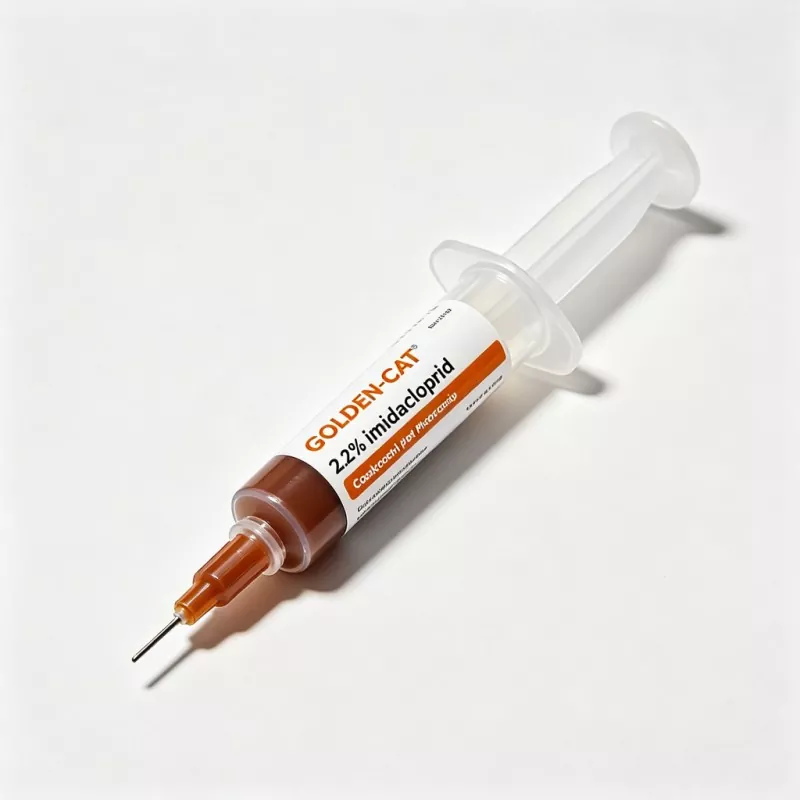
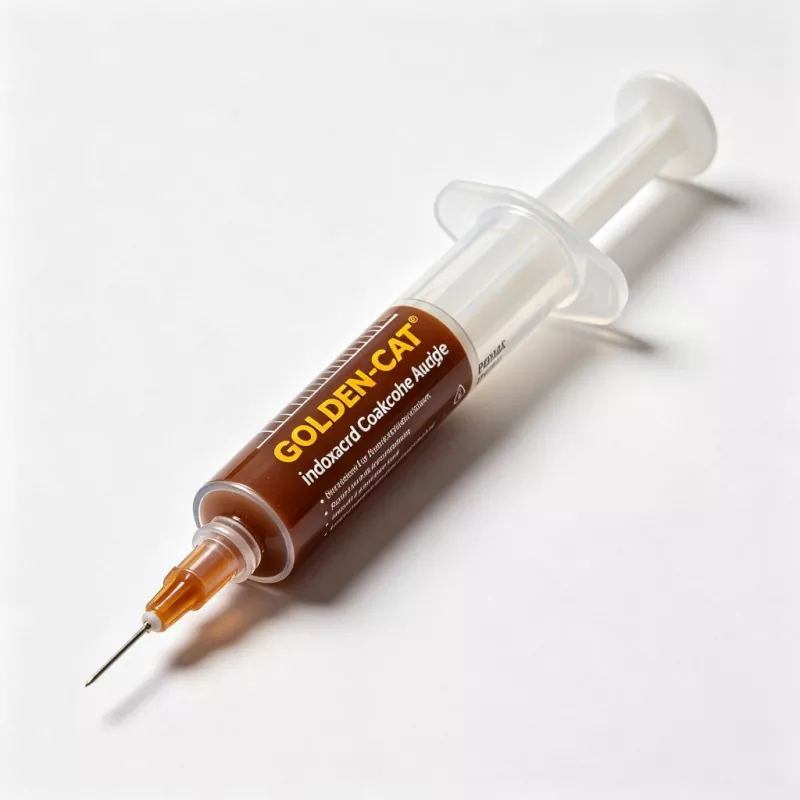
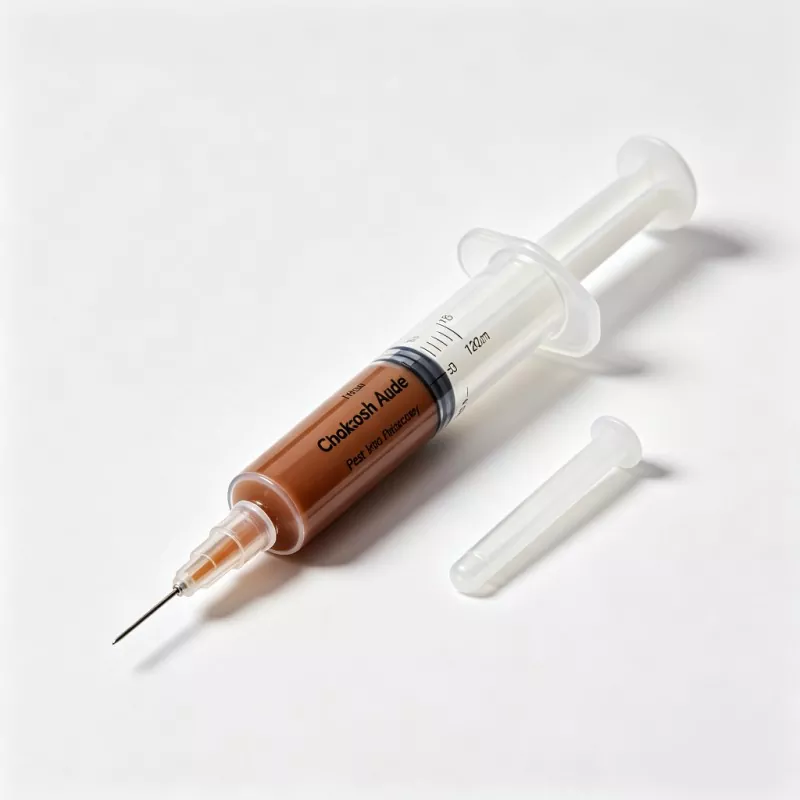
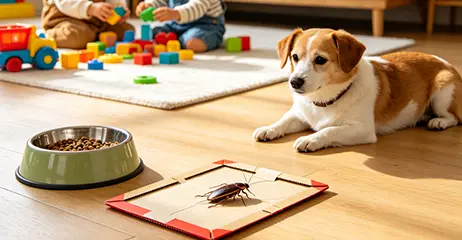
GOLDEN-CAT cockroach gel bait is produced by Dalian Golden-Cat Rodenticide Co., Ltd. in Dalian, China, a manufacturer of pest control products since 1984. It is supplied as a ready-to-use syringe gel for crack-and-crevice placement in kitchens, food facilities, hotels and multi-unit housing. Unlike Cockroach Glue Trap boards, which catch cockroaches that cross a surface, a gel bait is consumed. Cockroaches that feed on it return to the harbourage and die, and other cockroaches in the aggregation can be affected through secondary transfer. The categories serve different roles in a program and are usually used together.
Gel Bait Data
|
Parameter
|
Specification
|
|
Form
|
Ready-to-use syringe gel, no mixing
|
|
Active substance options
|
Imidacloprid 2.15% to 2.5%, fipronil 0.05%, dinotefuran 0.5%, indoxacarb 0.6%, depending on product and market
|
|
Target species
|
German cockroach (Blattella germanica), American cockroach (Periplaneta americana), Oriental cockroach (Blatta orientalis), brown-banded cockroach (Supella longipalpa)
|
|
Application method
|
Crack-and-crevice spots, not a bead or caulk line
|
|
Spot size, small species
|
3 mm diameter, approximately 0.25 g per spot
|
|
Spot size, large species
|
6 mm diameter, approximately 0.5 g per spot
|
|
Spot density
|
1 to 2 spots per m² for low to moderate infestation; higher near the harbourage
|
|
Palatability window
|
Up to 8 to 12 weeks in a clean, dry position, shorter in dusty or hot locations
|
|
Syringe sizes
|
10 g / 20 g / 30 g, depending on product
|
|
Shelf life
|
24 to 36 months sealed, cool and dry, depending on formulation
|
|
Documents
|
SDS, COA, registration reference, export paperwork
|
Spot Size and Spacing
A common mistake in gel baiting is to apply a continuous bead along a crack, as if caulking a window. This wastes product, dries out faster and does not improve control. Several smaller spots placed at intervals are more effective than one long line, because cockroaches encounter the bait at multiple points along a foraging route and because a small spot stays palatable longer than a thick bead.
For small species such as the German cockroach, a spot of about 3 mm and roughly 0.25 g is the usual size. For larger species such as the American cockroach, the spot is increased to 6 mm and about 0.5 g. Place a spot every 10 to 30 cm along an active harbourage edge, behind a hinge, under a kickboard or beside a pipe penetration.
The practical rule is to size the spot to the species present. A spot that is too large dries at the surface before the interior is consumed, and a spot that is too small is consumed before the aggregation is reached.
Where the Gel Belongs and Where It Does Not
Gel bait belongs in cracks, crevices, hinges, kickboards, equipment legs, wall voids and other concealed harbourage where a cockroach rests. It does not belong on an open floor, a countertop or a food-contact surface.
|
Position
|
Suitable
|
Reason
|
|
Hinge, cabinet corner, kickboard gap
|
Yes
|
Concealed, close to harbourage, protected from cleaning
|
|
Behind a refrigerator or under a sink
|
Yes, on a fixed surface
|
Warm and humid harbourage; keep away from drip lines
|
|
Wall void or conduit entry
|
Yes, where a spot can be injected
|
Reaches harbourage a surface spot cannot
|
|
Open floor or countertop
|
No
|
Dust, cleaning and foot traffic destroy the bait; not a harbourage
|
|
Inside a dishwasher or a routinely washed surface
|
No
|
Water and detergent remove the bait
|
|
Above a stove, oven or heat lamp
|
No
|
High temperature causes the gel to run
|
In a food facility, application is restricted to crack-and-crevice treatment. Any gel that contacts an exposed food surface must be removed and the surface cleaned. This is a placement rule, not a product limitation. A bait that is not in a crack is not where a cockroach harbours, and a visible bait in a food area is a contamination risk even when the active substance is approved for the site.
Gel and Monitoring Boards
A Cockroach Glue Trap board and a gel bait answer different questions. The board answers where the cockroaches are and how many. The gel answers whether the population at that point can be reduced.
The sequence that works is to place glue boards at fixed points, count the catch, and use the count to decide where to apply gel. If a kitchen has four monitoring points and only one shows cockroaches, the gel goes to that one harbourage, not to all four walls. After the gel has been down for the label interval, the same monitoring points are checked again. A falling count on the board is the evidence that the gel was consumed and worked. A count that does not fall suggests the gel was avoided, the placement was wrong or the harbourage was not reached.
Using gel without monitoring produces no evidence either way. The technician knows a bait was applied but not whether it was eaten, ignored or cleaned away. The board provides the record.
Frequently Asked Questions
Why is the gel ignored at some placements?
Bait aversion and competing food are the two common reasons. Some German cockroach populations avoid glucose-based bait matrices. A site with exposed food, grease or crumbs gives the cockroach an alternative that may be more attractive than the gel. Cleaning the competing food source and switching to a different bait matrix are the first responses, not increasing the amount of gel.
How long does a gel spot remain effective?
In a clean, dry, concealed position, a spot can stay palatable for 8 to 12 weeks. In a greasy kitchen, a dusty void or a position exposed to cleaning, the window is shorter. Check the spot at each service visit. If it has darkened, hardened or been painted over, replace it.
Can a gel bait replace a cockroach glue trap?
No. A Cockroach Glue Trap or a flat Glue Traps board monitors where activity is concentrated. The gel reduces the population at that point. A program that uses only gel has no independent measure of whether the gel worked. A program that uses only boards fills the boards without removing the harbourage.
Is the gel safe around food after it has been applied?
The label restricts placement to cracks and crevices in food areas. Gel must not contact food, utensils or food-contact surfaces. If it does, remove the gel and clean the surface. The product is a pesticide and is not intended to be in contact with food.
Which active substance should I choose?
The choice depends on the resistance profile at the site and the label in the destination market. Imidacloprid 2.15% to 2.5% is a common gel active with a rapid action profile. Fipronil 0.05% has shown high efficacy in published comparisons but is no longer authorised as a biocide in the EU. Dinotefuran 0.5% and indoxacarb 0.6% are also used. Rotate the active and the bait matrix where repeat applications are necessary, and record which active was used at each point.
Does secondary transfer really happen, or is it a marketing claim?
Horizontal transfer is a documented phenomenon in cockroach gel baits. A cockroach that consumes a slow-acting bait returns to the aggregation before dying, and other cockroaches can be affected through cannibalism or contact with the contaminated body. The extent varies by formulation and species. It is a real effect, not a guarantee that every cockroach in a harbourage will be killed by one placement.