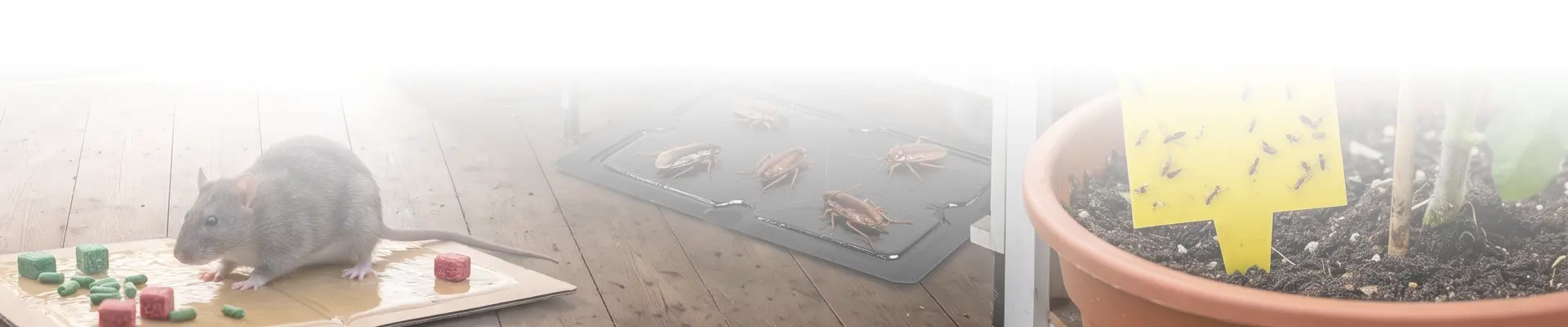
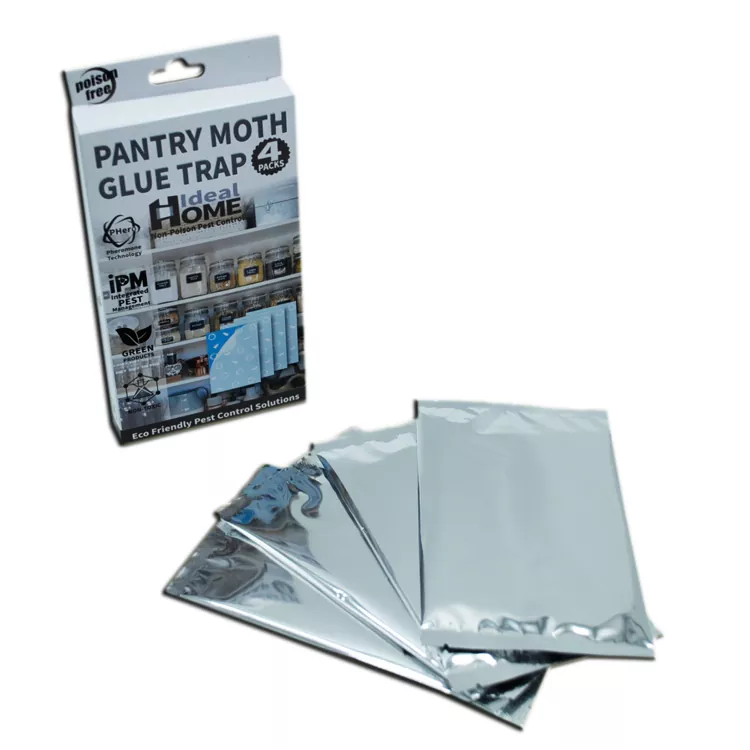
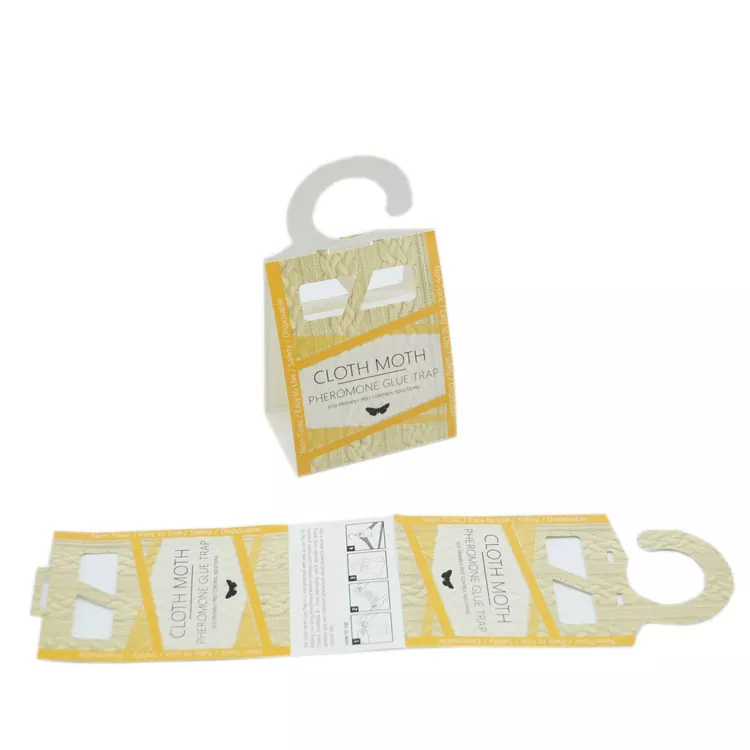
GOLDEN-CAT moth glue traps are produced by Dalian Golden-Cat Rodenticide Co., Ltd. in Dalian, China, a manufacturer of pest control products since 1984. Unlike Glue Traps or Cockroach Glue Trap boards, which catch insects that happen to cross them, a pheromone trap uses a species-specific lure to draw male moths to the sticky insert. What it produces is a weekly count that shows whether a stored product moth population is rising, falling or concentrated in one area. The trap body, sticky insert and lure are supplied as separate items so that each can be replaced on its own cycle. This is a monitoring instrument, not a control device in the same sense as Rodenticide and Rodent Bait.
Trap Configuration
|
Parameter
|
Specification
|
|
Form
|
Delta-shaped fold-flat trap, corrugated card or ABS plastic
|
|
Assembled size
|
18 × 12 × 10 cm
|
|
Sticky insert
|
Replaceable, 16 × 10 cm, non-drying adhesive, no pesticide active ingredient
|
|
Lure format
|
Sealed capsule or septum, species-specific sex pheromone blend
|
|
Lure life
|
4 to 8 weeks, shorter in high summer temperatures
|
|
Monitoring density
|
1 trap per 50 to 100 m² in a closed indoor space
|
|
Knock-down density
|
1 trap per 20 to 50 m² near the source or entry point
|
|
Shelf life
|
24 months sealed and cool; lure capsules refrigerated for longer storage
|
|
Documents
|
Lure composition statement, technical data sheet, export paperwork
|
The Lure Decides What the Trap Catches
The sticky insert is the capture surface. The lure is the part that determines which moth species responds, and it is far more specific than the yellow color used in Fly Glue Traps or Insect Glue Trap boards.
A pheromone blend for Indian meal moth (Plodia interpunctella) will not attract codling moth in an orchard. A clothes moth lure will not register stored product moths in a grain warehouse. Closely related species sometimes show limited cross-attraction, but this is the exception rather than the rule. The secondary components of a pheromone blend are what give it species specificity.
The practical consequence is that lure selection comes before trap selection. A warehouse holding grain, dried fruit and textiles may carry two or three moth species at the same time. One lure type will monitor one species group and miss the others. Separate traps with separate lures, placed near the relevant commodity, give a usable picture.
Monitoring Grid, Not a Scatter
A pheromone trap used for monitoring is placed at a fixed point, checked on a fixed day and counted by trap number and species. The density figures only work if the traps are distributed on a planned pattern.
· A floor plan with numbered trap positions is the starting document. Without it, a count cannot be mapped.
· Positions stay fixed between visits. If a trap has to move, record the date and the reason.
· Height follows the species and the room. Stored product moths fly near the commodity surface. A trap at shelf height in a warehouse catches more than one at ceiling height. Clothes moths fly low in dark textile stores.
· Avoid placing a trap directly in front of a ventilation outlet, a fan or an open loading door. Air movement breaks up the pheromone plume and the catch drops even when moths are present.
· Traps placed too close together can interfere with each other's pheromone plumes. A monitoring grid is deliberately spaced, not clustered.
For knock-down, the density increases near the source and entry points. The aim is to remove adult males and reduce mating pressure, not to produce a trend line. Mixing monitoring and knock-down produces a count that cannot be compared across weeks.
Two Consumables, Two Replacement Dates
The trap body is reused. The insert and the lure are consumables, and they expire on different schedules. Treating them as one item is a common source of bad data.
|
Component
|
Replacement trigger
|
What happens if it is missed
|
|
Sticky insert
|
Surface covered, dust film, or every 4 to 6 weeks
|
Capture drops before the insert looks full
|
|
Lure capsule
|
Every 4 to 8 weeks, shorter in high summer heat
|
The capsule looks intact but the pheromone load has dropped; catch falls with no visible cause
|
The lure is the more deceptive of the two. An expired capsule looks identical to a fresh one, so the catch can fall with no visible cause. High temperatures increase the evaporation rate and shorten the effective life of the lure. The correct interval depends on the specific lure and the temperature at the site, and the manufacturer's recommendation for that lure should be followed rather than a general figure.
Write the installation date on the trap body at placement. Replace on the calendar, not on appearance. Keep spare capsules sealed and refrigerated until use. An opened capsule left in a warm room releases pheromone before it reaches the trap.
Frequently Asked Questions
Can one lure type monitor all moth species in a facility?
No. Pheromone lures are species-specific, with limited cross-attraction between closely related species. A stored product lure will not attract clothes moths, and an orchard lure will not attract Indian meal moth. Identify the species present, then select the matching lure. A facility with more than one species needs more than one lure type.
How do I know when to replace the lure if it still looks intact?
The capsule does not change appearance when the pheromone load drops. Write the installation date on the trap body and replace on the calendar. A capsule that has been open for 8 weeks in a warm room is due for replacement even if it looks new. High summer temperatures shorten the effective life, so the interval may need to be shorter in July than in March.
Does a high catch mean the infestation is getting worse?
Not necessarily. A high catch can reflect a rising population, a new emergence, a lure that is working well, or a trap placed in a better position than the previous one. Compare counts from the same trap number across consecutive weeks before drawing a conclusion, and check whether the lure or insert was changed in between.
Is a pheromone trap a substitute for a cockroach glue board or a rodenticide?
No. A moth trap targets adult male moths of a specific species. A Cockroach Glue Trap targets cockroaches, and Rodenticide and Rodent Bait targets rodents. The categories address different pests and are used alongside each other in a facility program, not as alternatives. Mouse Glue Traps and Fly Glue Traps serve their own target groups.
What is the difference between monitoring and mass trapping with this trap?
Monitoring uses a sparse grid at fixed positions, counted weekly, to produce a trend. Mass trapping uses a higher density near the source, inspected more often, to remove adult males. A monitoring trap that is moved or replaced at random gives a count that cannot be compared. A mass-trapping trap is not counted by point.
Does the trap need a biocide authorisation in the EU?
It may. Pheromone-based moth products can be authorised under the Biocidal Products Regulation through the simplified procedure, and at least one such product has been authorised in a member state for indoor professional use. A buyer should confirm whether the specific product holds a national authorisation or qualifies for the simplified procedure in the destination member state.