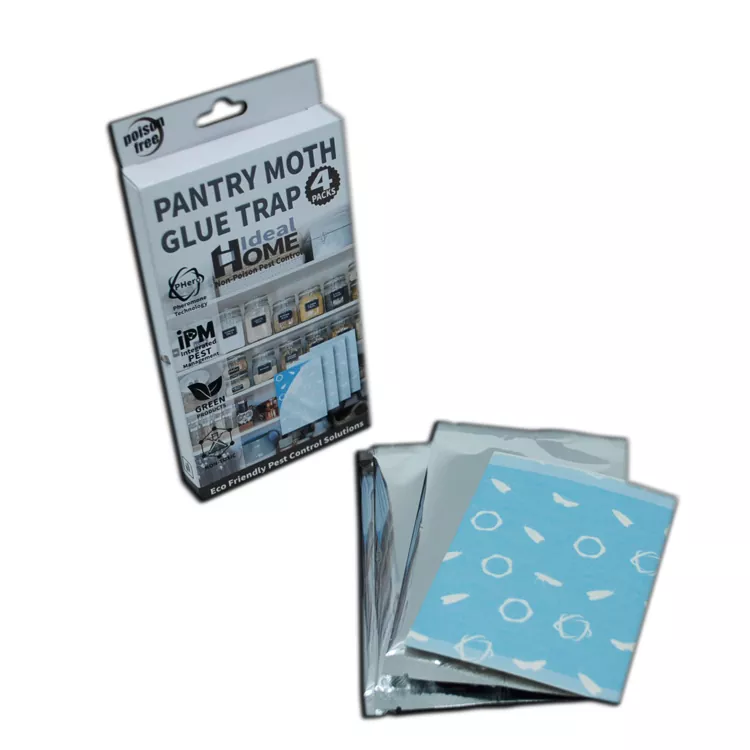
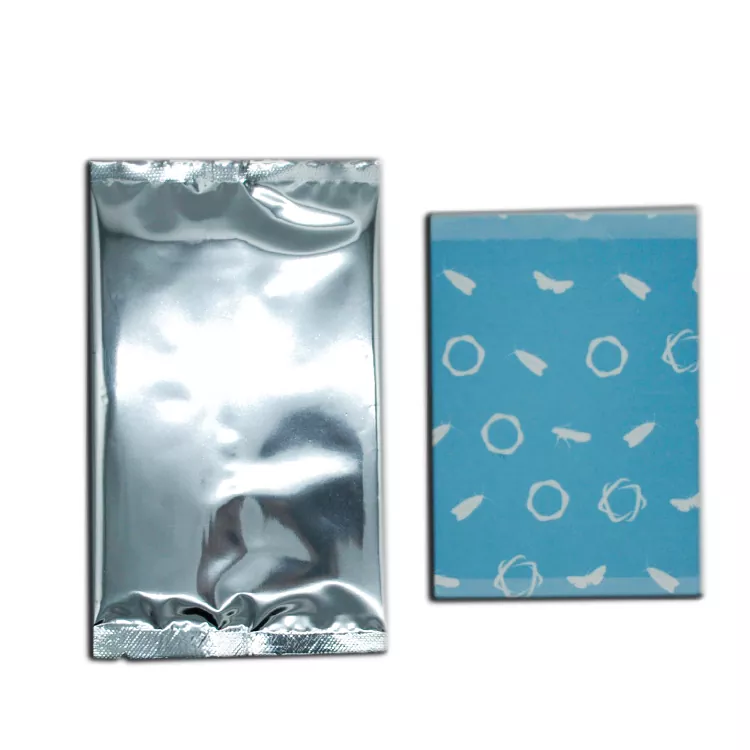
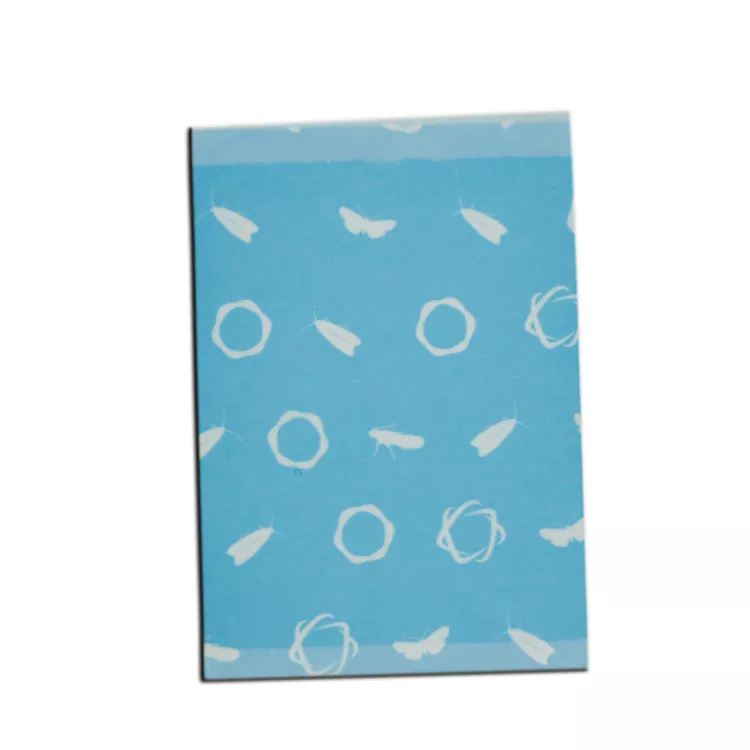
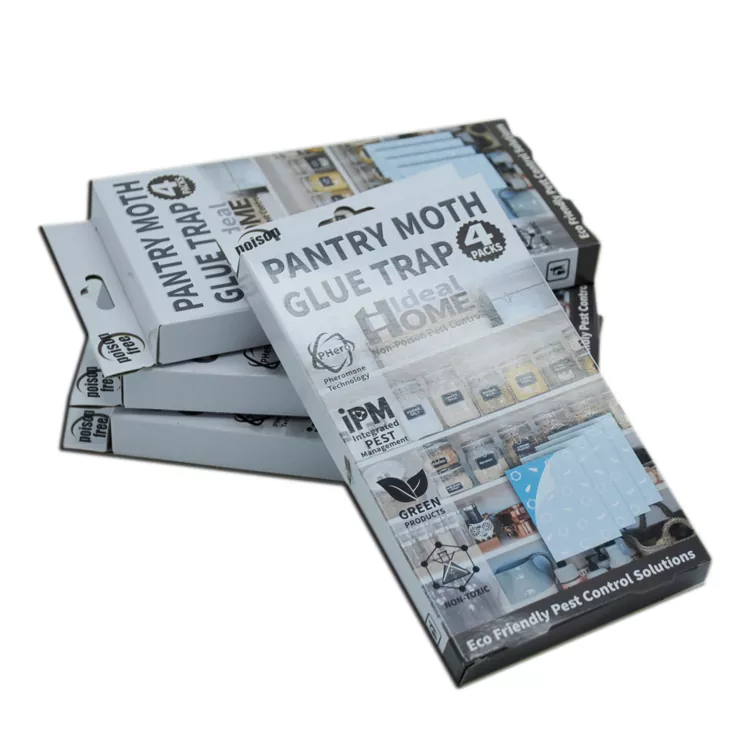
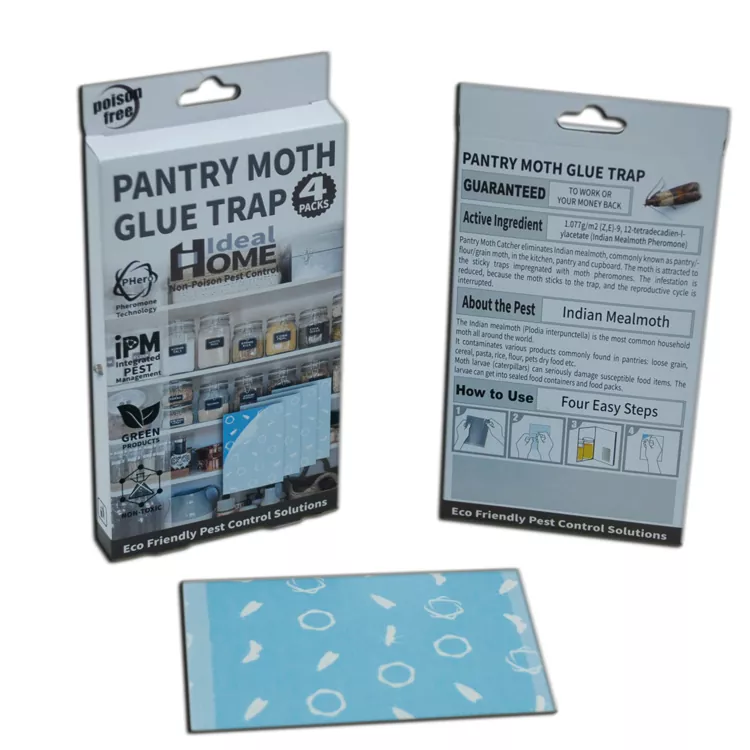
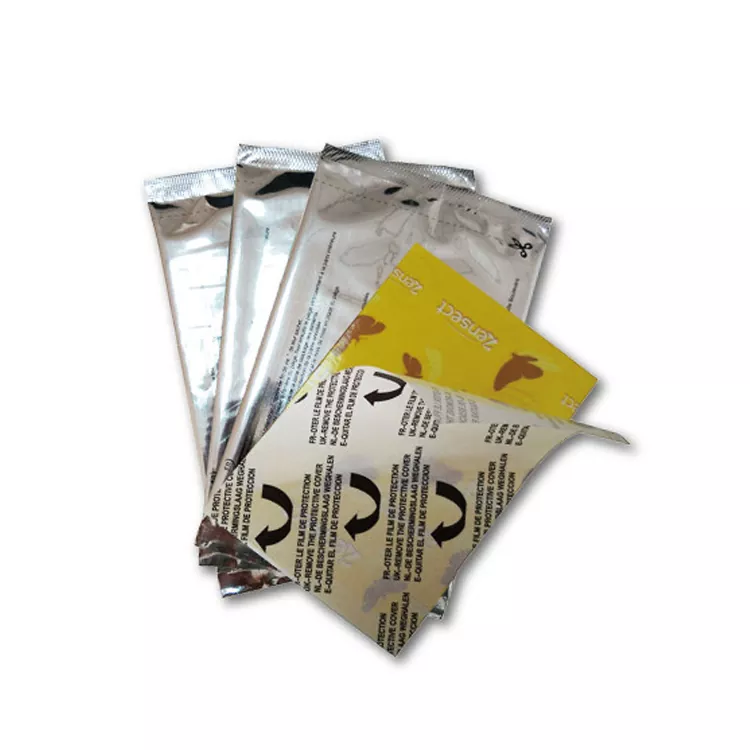
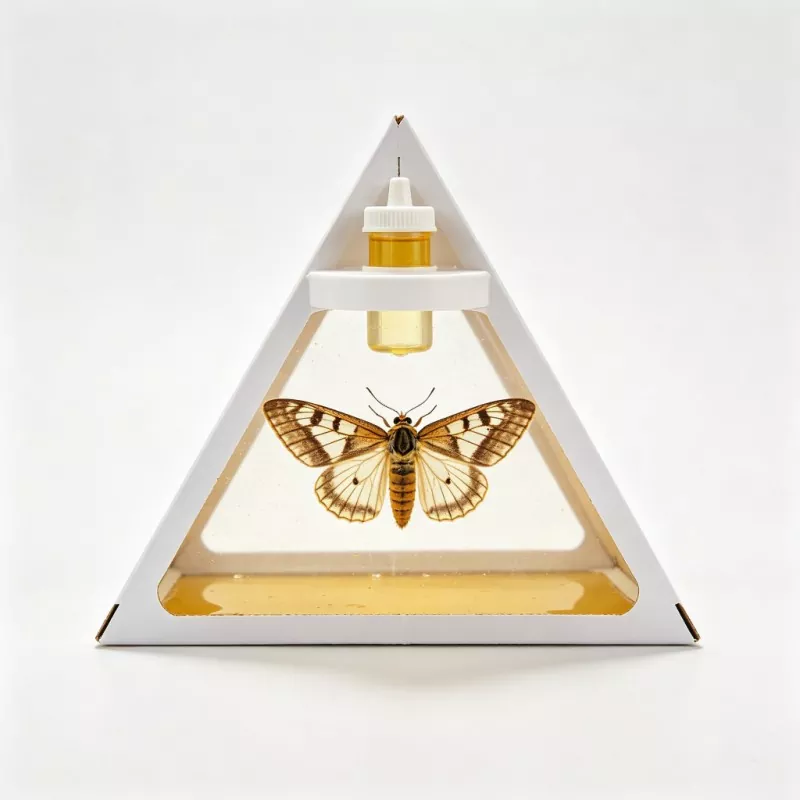
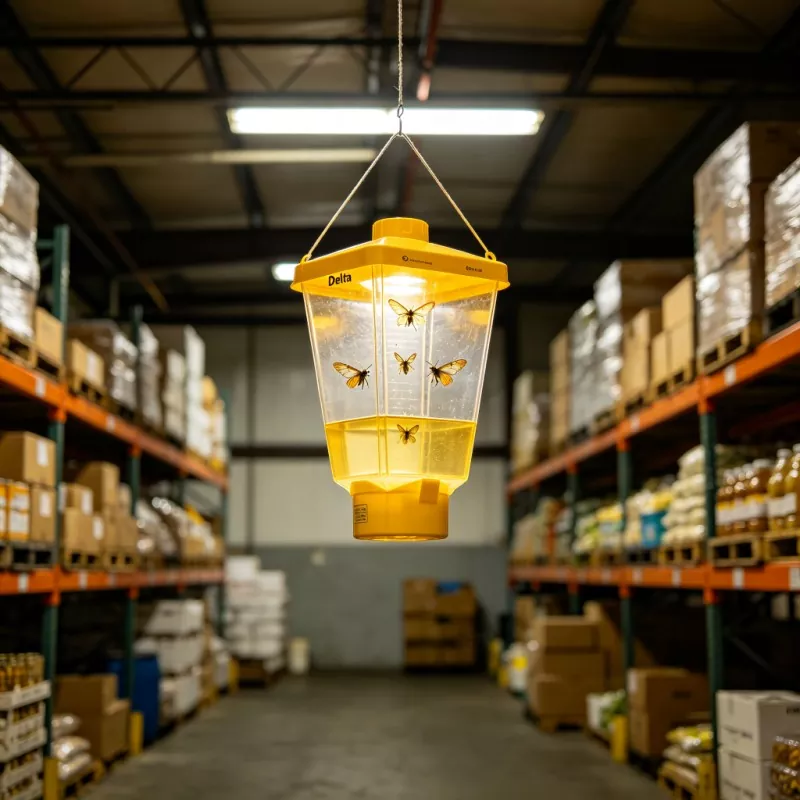
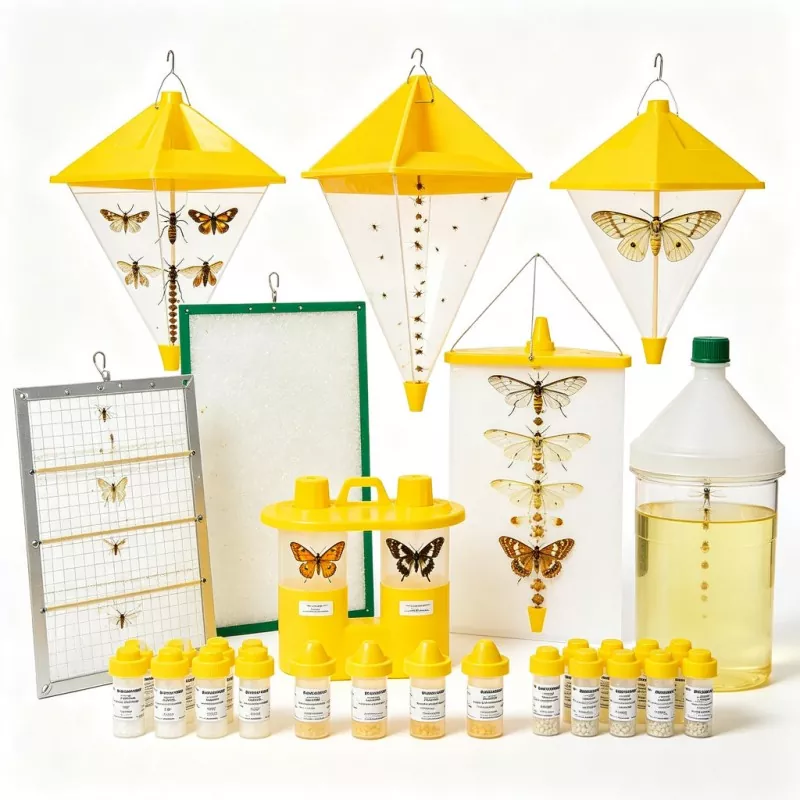
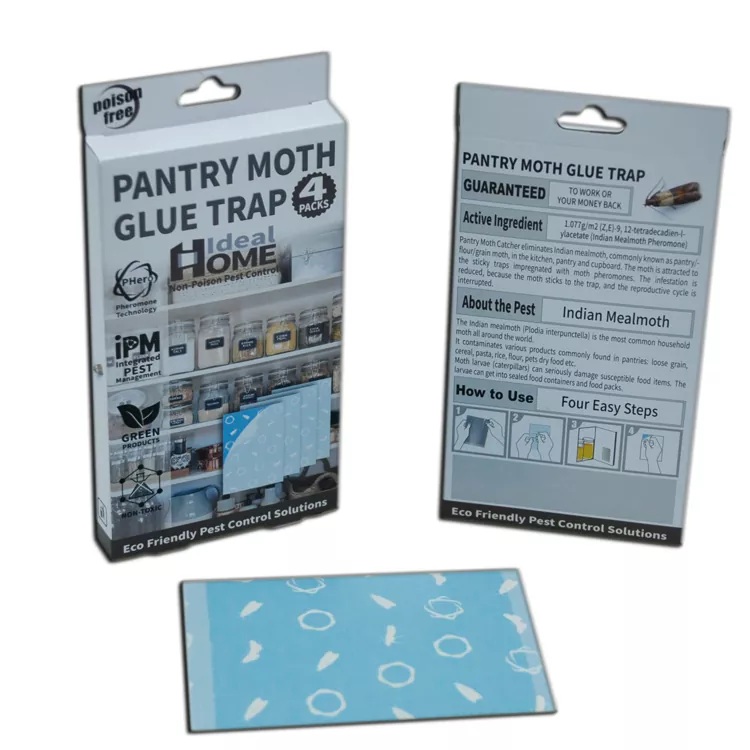
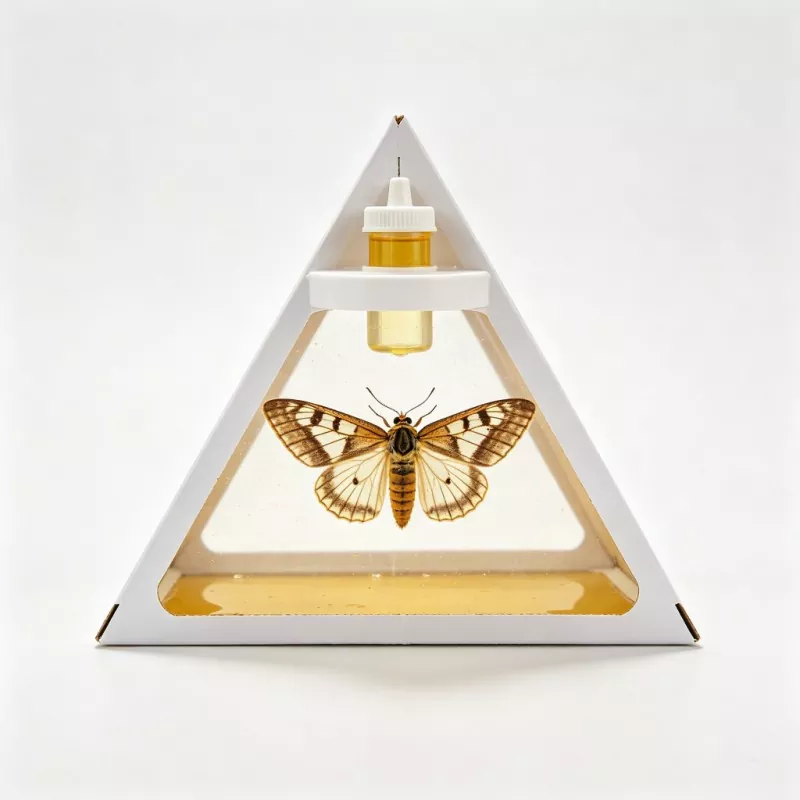
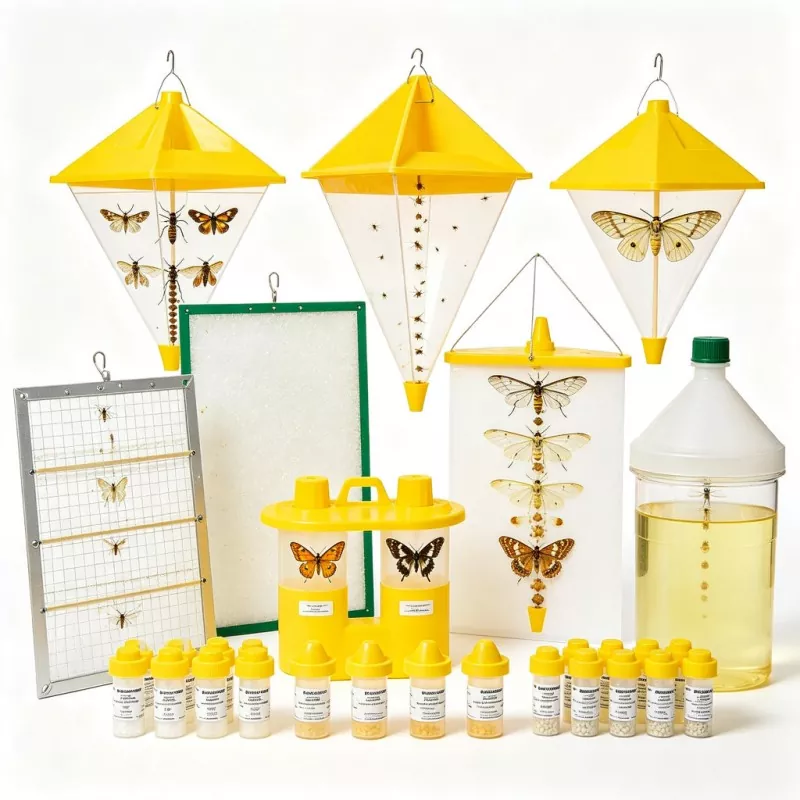
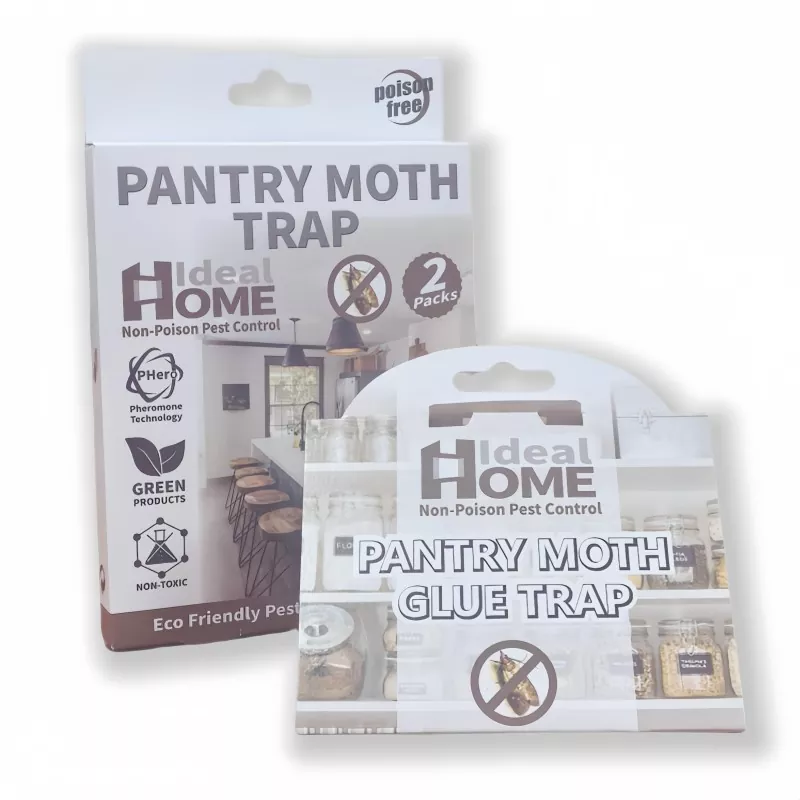
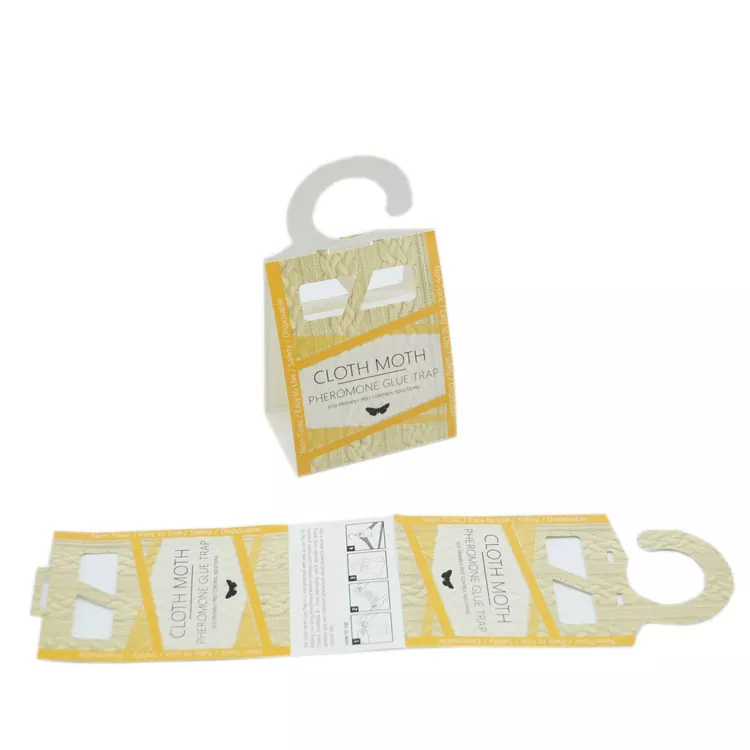
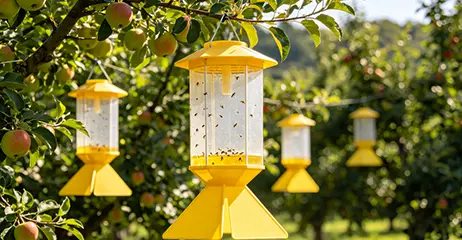
GOLDEN-CAT Pheromone Moth Glue Trap is a professional-grade insect monitoring and control solution designed for integrated pest management (IPM) programs in commercial, agricultural and industrial environments. Featuring a classic delta/triangular design with replaceable sticky inserts and species-specific pheromone lures, this trap provides targeted, eco-friendly moth control without pesticides. The durable construction and modular design make it ideal for long-term monitoring programs in food processing facilities, warehouses, farms and retail environments.
This Pheromone Moth Glue Trap exists to produce a catch number that means something. It is a delta-shaped pheromone trap for moth monitoring and mass trapping in food processing, grain storage, textile collections and orchards, made by Dalian Golden-Cat Rodenticide Co., Ltd. and supplied to PCOs, food safety teams and agricultural distributors. The trap body, insert and lure are supplied as separate items so that each can be replaced on its own cycle. Lure samples, a technical data sheet and a placement guide are available on request.
Product Configuration
Brand
GOLDEN-CAT
Product
Pheromone Moth Glue Trap
Capture method
Species-specific sex pheromone lure plus sticky insert
Trap body
Corrugated card or ABS plastic, fold-flat
Body color
White / Yellow
Assembled size
18 × 12 × 10 cm
Sticky insert
Replaceable, 16 × 10 cm
Lure format
Sealed capsule or septum, species-specific
Lure life
4 to 8 weeks, depending on species and temperature
Pack format
10 traps plus 10 lures per inner box
Export carton
10 inner boxes, 100 traps plus 100 lures
Shelf life
24 months sealed and cool; lure capsules refrigerated for longer storage
Documents
Lure composition statement, technical data sheet, export paperwork
The Lure Decides What the Trap Catches
The board and the glue are secondary. The pheromone blend in the capsule determines which moth species responds. A lure made for Indian meal moth will not attract codling moth in an orchard, and a clothes moth lure will not register stored product moths in a grain mill.
This has consequences that a buyer should resolve before ordering traps, not after.
Identify the species first. In a grain mill the usual targets are Indian meal moth and Mediterranean flour moth. In a textile store it is webbing clothes moth. In an apple orchard it is codling moth. The trap body is identical in all three cases. The capsule is not.
One lure type monitors one species group. A warehouse holding grain, dried fruit and textiles may carry two or three moth species at the same time. A single lure type will monitor one group and miss the others. Separate traps with separate lures, placed near the relevant commodity, give a usable picture.
Catch counts are not comparable across lure types. A trap showing 40 moths with an Indian meal moth lure cannot be compared directly with a trap showing 40 moths with a clothes moth lure. Record the lure species next to the count, or the number has no meaning across positions or months.
Two Densities, Two Different Jobs
Monitoring and mass trapping use the same trap but answer different questions.
For monitoring, the aim is coverage. Traps are distributed on a grid at roughly 1 per 50 to 100 m², inspected on a fixed day each week, and counted by trap number and species. The number tells you where moths are appearing and whether the trend is rising. A monitoring grid is deliberately sparse because it is designed to detect, not to suppress.
For mass trapping, the aim is removal. Traps are concentrated near the source and entry points at roughly 1 per 20 to 50 m², and inspected more often during flight peaks. The number here is a total catch and a trend, not a map of positions.
Mixing the two purposes produces a count that cannot be used for either. A mass-trapping density recorded as if it were monitoring gives high totals with no spatial meaning. A monitoring grid used for mass trapping removes too few adults to change the population curve.
The density figures assume a closed indoor space. In open orchards and warehouses with strong air movement, the pheromone plume disperses faster and the same density covers less effective area. Outdoor programs usually work per tree or per row rather than per square meter.
What Changes the Catch Number
A falling or rising count is not automatically a change in the moth population. Several factors move the number first.
· Air movement. A trap in front of a ventilation outlet, a fan or an open loading door loses its pheromone plume. Catch drops even when moths are present. Move the trap, then compare.
· Competing odor. Strong food odors, solvent vapors and dust can mask the pheromone. In a spice or coffee store, a trap near the strongest odor source will underperform.
· Height. Stored product moths fly near the commodity surface. Traps at ceiling height in a warehouse catch less than traps at shelf height. Clothes moths fly low in dark textile stores. Codling moth is monitored at canopy height in orchards.
· Lure age. A capsule that has passed its effective life still looks intact. The pheromone load drops without any visible change. This is the most common cause of a count that falls for no apparent reason.
· Insert condition. A dust film or a saturated insert reduces capture before the lure expires. In a dusty grain store the insert may need changing before the capsule.
Two Consumables, Two Replacement Dates
The trap body is reused. The insert and the lure are consumables, and they expire on different schedules. Treating them as one item is a common source of bad data.
· Sticky insert. Replace when the surface is covered, when dust reduces tack, or every 4 to 6 weeks, whichever comes first.
· Lure capsule. Replace every 4 to 8 weeks according to species and temperature. Write the installation date on the trap body at placement.
· Storage. Keep spare capsules sealed and refrigerated until use. An opened capsule left in a warm room releases pheromone before it reaches the trap.
· Disposal. Used inserts and lures go to general waste. The trap body can be reused or recycled.
Because the two items expire on different cycles, a distributor or PCO typically orders traps once and reorders inserts and lures on a repeating schedule. The trap body is not the repeat-purchase item.
Records That Make the Trap Useful
A pheromone trap without a record is a sticky board with moths on it. The value comes from the pattern across weeks and positions.
· A numbered trap map for the site.
· Weekly catch by trap number and by species.
· Lure installation and replacement dates.
· Insert replacement dates.
· Any change in trap position or height, noted on the date it happened.
· Corrective action taken when a catch threshold is exceeded.
In a food facility, these records are what an auditor reviews. The trap itself provides evidence of a structured monitoring system. It is not a stand-alone control measure, and it does not replace cleaning, stock rotation or exclusion.
Developed against a specified species, supplied with a matching trap and insert
Performance data for a specific species and temperature range can be supplied on request. Formulations for species not listed above can be developed for OEM orders, subject to a minimum quantity and a development period.
Ordering Information
Factory
Dalian Golden-Cat Rodenticide Co., Ltd., Dalian, China
Customization
Trap body material, lure species, insert size, inner box and brand
Minimum quantity
500 traps standard; trial orders negotiable
Production lead time
10 to 15 days for stock; 25 to 35 days for custom OEM
Shipment ports
Shanghai / Ningbo
Trade terms
FOB / CIF / DDP
Payment terms
T/T, L/C
Carton configuration
Approx. 50 × 40 × 30 cm, 8 kg gross, 10 inner boxes per carton
Buyer Questions
How do I choose a lure if I am not sure which moth is present?
Catch a few moths first and identify them, or ask the site’s pest control provider to identify the species. Ordering a mixed set of the most likely lures for the commodity is a reasonable second option. Ordering a single lure on the assumption that all moths respond to it is not.
Why did the count fall after several weeks with no change in the facility?
Check the lure age and the insert condition before assuming the population dropped. An expired capsule looks identical to a fresh one, and a dust film on the insert reduces capture. Replace both, keep the trap position unchanged, and compare the next two weekly counts.
Can the trap be used as the only moth control measure in a food store?
No. The trap monitors and removes adults. It does not remove larvae, infested stock or the breeding source. Cleaning, stock rotation and sealed storage remain the primary controls. The trap provides the evidence that tells you whether those controls are working.
Do you supply inserts and lures separately from the trap body?
Yes. Inserts and capsules are separate items, and custom lure species can be supplied against a trap order. Distributors and PCOs usually order traps once and reorder inserts and lures on a cycle.
What documentation is available for a food safety audit?
A lure composition statement, a technical data sheet and a placement guide. The trap contains no pesticide active ingredient. Trap maps, catch logs and corrective action records are generated by the site as part of its own monitoring system.
We use cookies to offer you a better browsing experience, analyze site traffic and personalize content. By using this site, you agree to our use of cookies. Privacy Policy