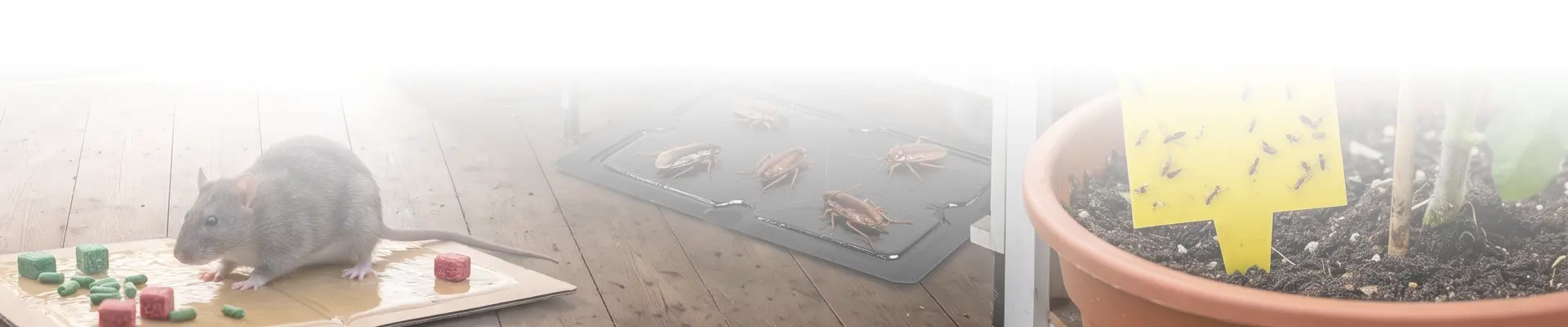
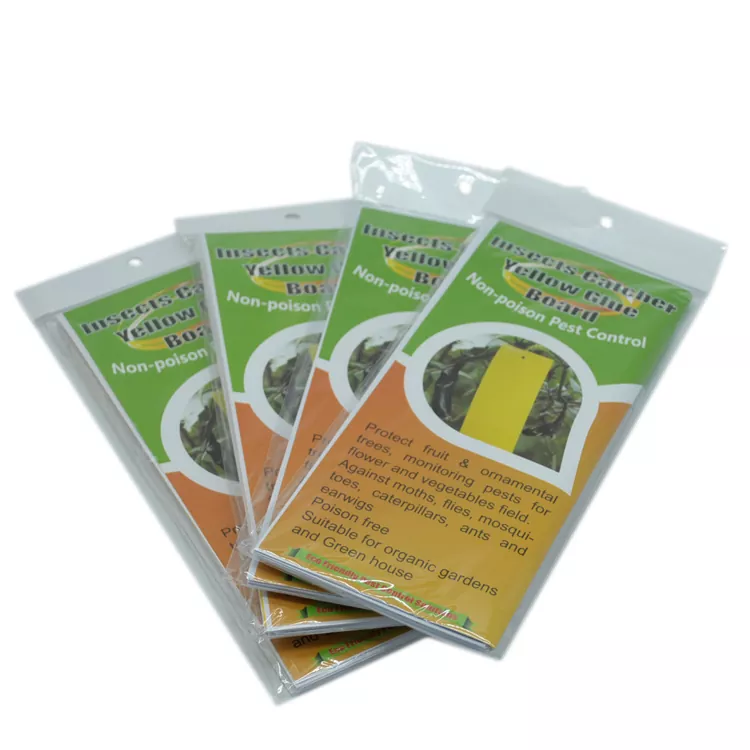
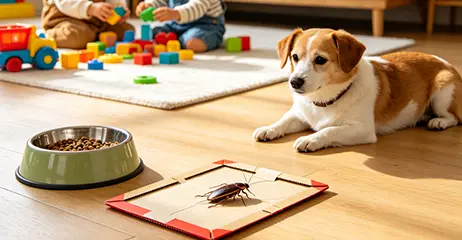
GOLDEN-CAT Insect Glue Traps are flat adhesive boards for detecting and capturing crawling insects that walk onto the glue surface. They contain no insecticide and no lure. Their role in a program is to answer a question, which is what is moving along this edge, before any treatment decision is made. GOLDEN-CAT has produced adhesive pest control products in Dalian since 1984, alongside Mouse Glue Traps, Cockroach Glue Traps and Fly Glue Traps.
Product Specifications
|
Brand
|
GOLDEN-CAT
|
|
Product Type
|
Flat glue board, optionally folded into a covered monitor
|
|
Capture Range
|
Crawling insects: spiders, silverfish, firebrats, crickets, earwigs, beetles, ants, millipedes, sowbugs, pillbugs, centipedes
|
|
Not Designed For
|
Flying insects, rodents, stored-product moths. These require a different board format and, where applicable, a species-specific lure.
|
|
Adhesive
|
Hot-melt pressure-sensitive, non-drying, solvent-free
|
|
Lure
|
None. The board intercepts insects on their existing path.
|
|
Board Material
|
Cardboard, plain or moisture-resistant coating
|
|
Standard Board Size
|
Approx. 200 × 100 mm flat. Custom dimensions on request.
|
|
Fold Configuration
|
Flat for open edges. Foldable into a covered tunnel for dusty areas, overhead placement or concealed monitoring.
|
|
Temperature Range
|
Adhesive remains tacky in moderate temperatures. It hardens below 0°C and softens on hot surfaces or in direct sunlight.
|
|
Service Life
|
Up to 60 days in dry, dust-free conditions. Shorter where dust, grease, moisture or heavy catch covers the glue.
|
|
Packaging
|
Individual sealed sleeves; display boxes or bulk cartons
|
|
Shelf Life
|
24 months sealed, cool dry storage
|
|
Quality Documentation
|
ISO 9001 manufacturing; SDS on request
|
|
Regulatory Status
|
Non-insecticidal article. Buyer responsible for local labelling and import requirements.
|
What This Board Is For, and What It Is Not
An insect glue board is used when the target is not yet identified. A facility manager reports insects in a storage room, or a food safety audit requires evidence of a monitoring program along a perimeter. The board is placed, left for an interval, then inspected. The species on the board and the location of the catch determine what happens next.
This is a different function from a Cockroach Glue Trap. A cockroach board is placed because cockroach is already the target, and the catch is read as a cockroach activity index. An insect board is placed because the target is unknown, and the catch is read as a species list. The two boards should not be substituted for each other, because the catch from one cannot be converted into the index of the other.
|
Program question
|
Board to use
|
|
What is moving along this wall
|
Insect Glue Trap
|
|
How large is the cockroach population at this location
|
Cockroach Glue Trap
|
|
Are mice using this route
|
Mouse Glue Traps
|
|
Are flies entering at this doorway
|
Fly Glue Traps
|
Flat or Folded
The same board is used in two configurations, and the choice is not cosmetic.
|
Configuration
|
When to use it
|
Trade-off
|
|
Flat on the floor
|
Along wall edges, under equipment, in corners. Open to the ceiling, so it catches insects dropping or moving across the surface.
|
The glue is exposed to dust and debris. In a dusty area the surface can be covered before the service interval.
|
|
Folded into a covered tunnel
|
Dusty rooms, overhead shelves, areas where the board must not be visible to clients or staff.
|
The cover protects the glue but also narrows the opening. A board with an oversized entry gap loses catch.
|
In a dusty mechanical room or a flour storage area, the folded configuration is the only one that stays functional for the full service interval. On a clean office baseboard, the flat board exposes more glue surface and is easier to inspect at a glance.
Service Interval and Replacement
Inspect weekly during the active season and monthly during colder periods as a baseline. In food handling and healthcare settings, the facility IPM plan usually sets a shorter interval and requires a written record per device.
Replace the board when the glue is covered with dust, grease or catch, or after about 60 days in dry conditions. Replace it immediately if the board has become wet, if it has been exposed to direct sunlight and the glue has softened, or if it has been disturbed by cleaning staff.
The glue hardens below 0°C. In unheated warehouses and loading areas, a glue board used through winter will not produce usable data. Either monitor with a different method during freezing periods or record the gap explicitly rather than reporting a zero catch.
Frequently Asked Questions
Can this board catch flies or moths?
Occasionally, but not at a useful rate. A flat board on the floor relies on insects walking onto the glue. Flies and moths are intercepted in flight, which is why Fly Glue Traps use a hanging or window-mounted format and Moth Glue Traps use a species-specific lure. Use those formats for flying insects.
What is the difference between this board and a Cockroach Glue Trap?
The function, not only the glue area. The insect board is a general detection tool placed where the target is not yet known, and the catch is read as a species list. The Cockroach Glue Trap is placed where cockroach is already the target, and the catch is read as an activity index. Substituting one for the other produces data that cannot be compared across visits.
Should I use the flat or folded configuration?
Flat along clean, accessible wall edges. Folded into a covered tunnel in dusty rooms, overhead locations or areas where the board must be concealed. The folded cover protects the glue but narrows the opening, so check that the entry gap is not obstructed after folding.
How often should the board be replaced?
When the glue is covered with dust, grease or catch, or after about 60 days in dry conditions. Replace immediately if the board is wet, sun-softened or disturbed. A board that stays in place after the glue is covered is no longer sampling.
Do you offer OEM board sizes and private label?
Yes. Custom board dimensions, fold configurations, adhesive coverage and packaging are available against minimum order quantities. Board size and placement profile affect catch performance, so confirm the intended monitoring location and target pest before finalising a custom specification.