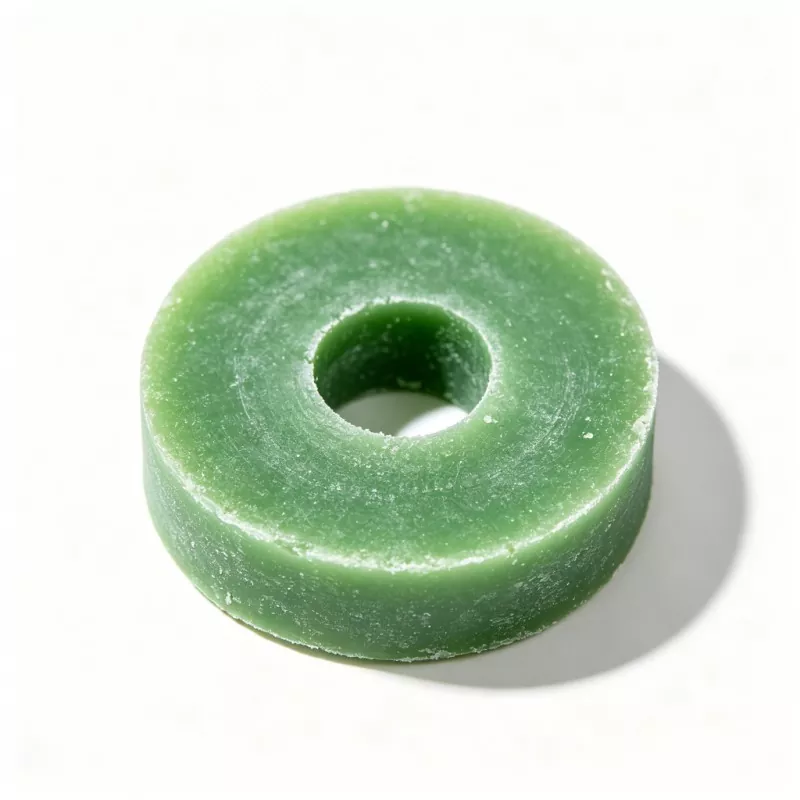
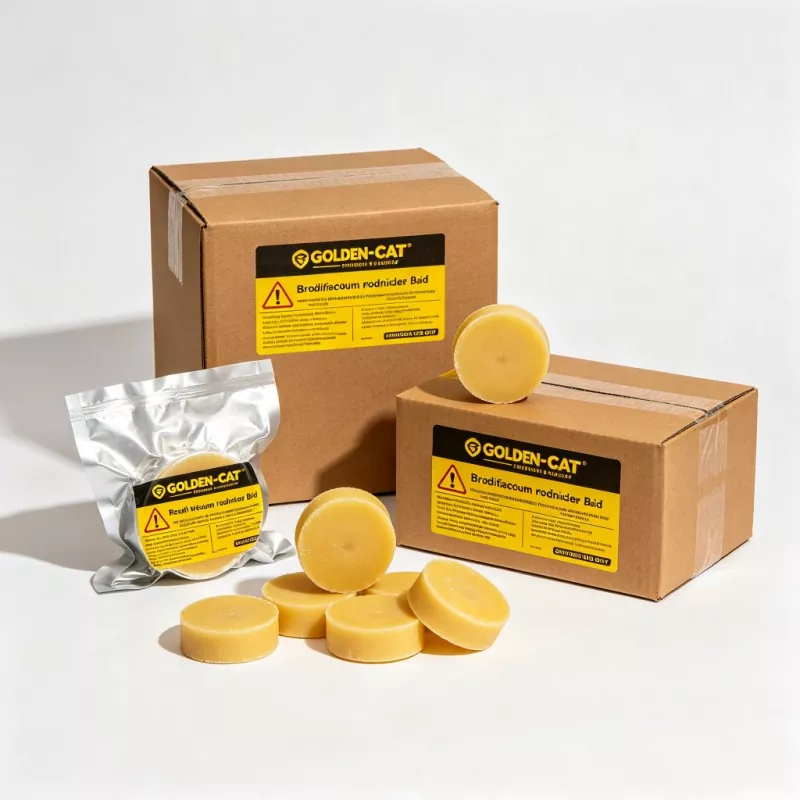
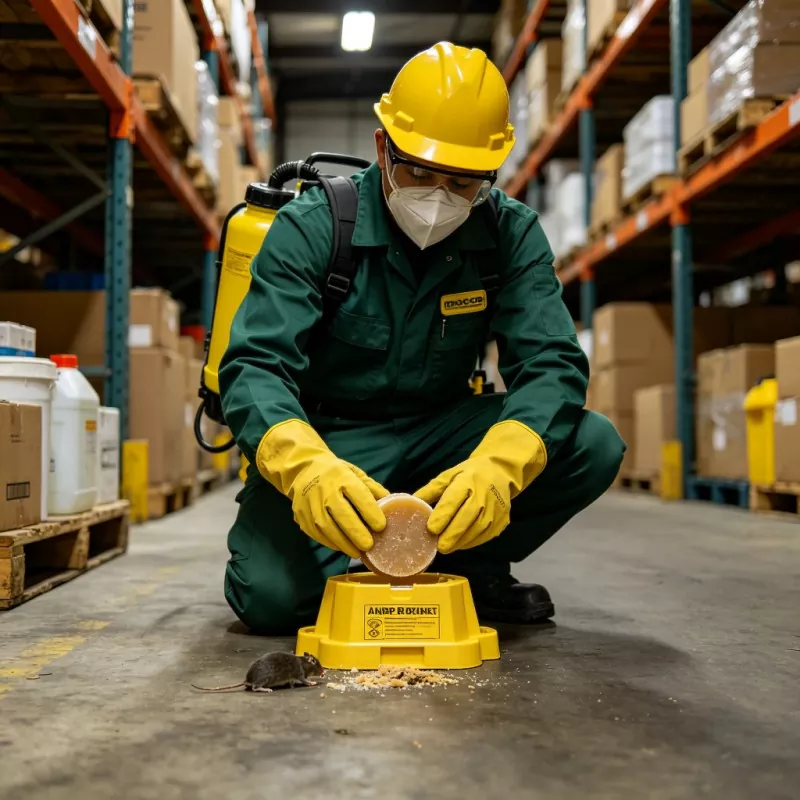
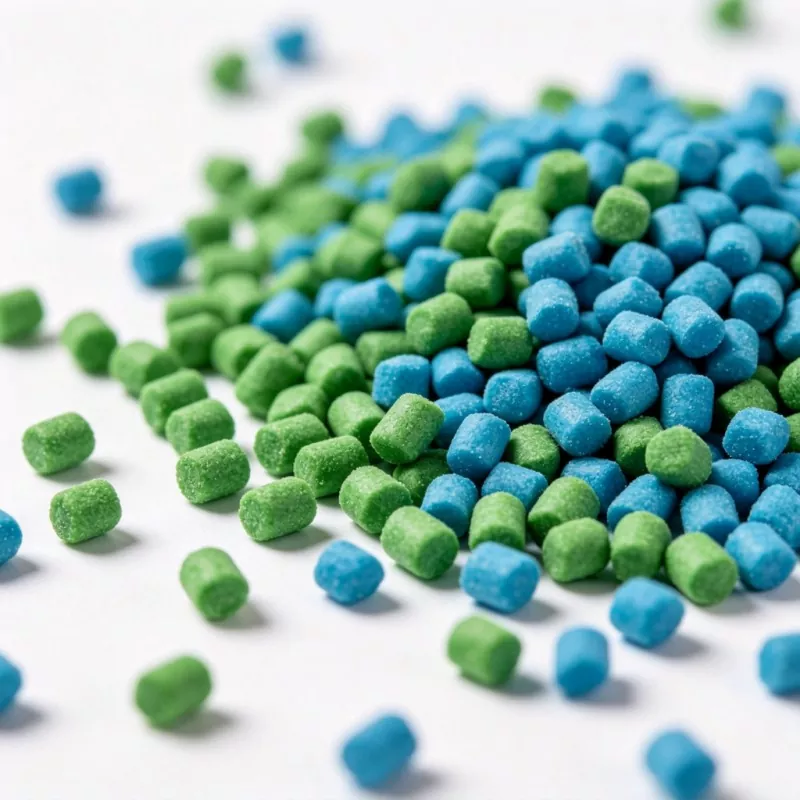
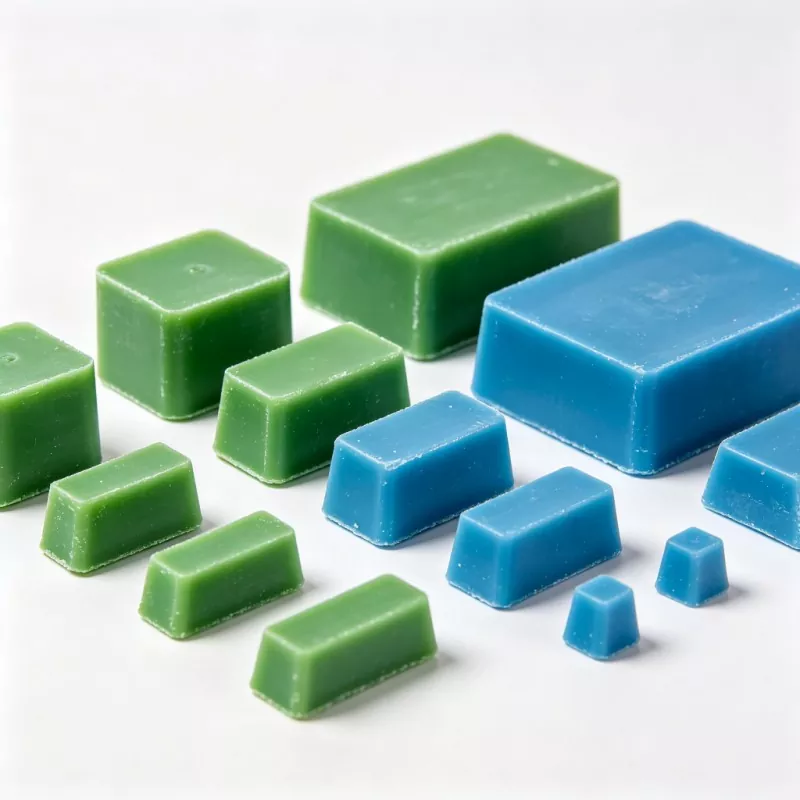
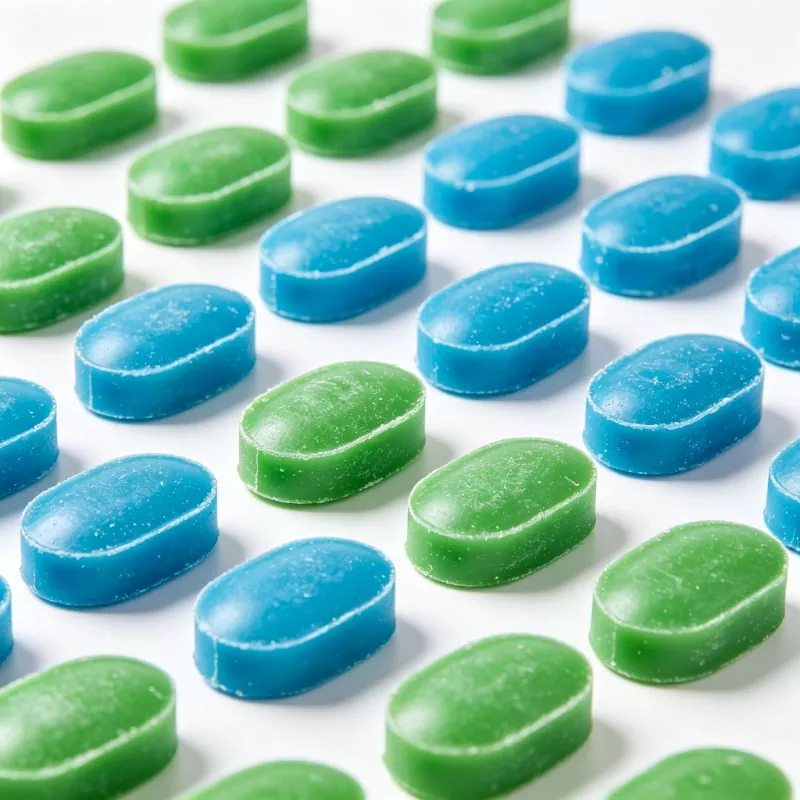
GOLDEN-CAT Round Brodifacoum Wax Block Rodenticide Bait is a professional-grade second-generation anticoagulant rodenticide formulated for severe rodent infestations in commercial, industrial and institutional environments. The round wax block formulation features premium brodifacoum active ingredient embedded in a weather-resistant wax matrix, providing highly effective control of Norway rats, roof rats and house mice — including strains resistant to first-generation anticoagulants. The unique round shape with center hole is designed for easy placement in tamper-resistant bait stations and offers excellent durability in damp and outdoor environments.
⚠️ IMPORTANT SAFETY NOTICE: This Round Brodifacoum Wax Block Rodenticide Bait is for PROFESSIONAL USE ONLY. Brodifacoum is a highly potent second-generation anticoagulant rodenticide. It must be handled and applied only by licensed pest control professionals in strict accordance with local regulations. Keep out of reach of children, pets and non-target animals.
A round brodifacoum wax block with a central fixing hole, made by Dalian Golden-Cat Rodenticide Co., Ltd. The hole lets the block thread onto a station rod or screw to a mounting surface, which is the main reason this format is chosen for sewer chambers, perimeter stations and sites where bait must stay in place between service visits. Samples, the SDS and a price quotation are available to licensed PCOs and distributors before an order is confirmed.
Product Data
Brand
GOLDEN-CAT
Product
Round Brodifacoum Wax Block Rodenticide Bait
Active substance
Brodifacoum
Concentration
0.005% w/w (50 ppm) standard; other strengths by market requirement
CAS number
56073-10-0
Action
Second-generation anticoagulant, vitamin K antagonist
Form
Molded round block with center hole
Bittering agent
Denatonium benzoate where required by destination market
Function of the Center Hole
The hole is a fixing point. It changes how the block sits in a station and how a technician records it.
· Rod or screw fixing. The block threads onto the station rod or is screwed to the station floor and stays where it was placed.
· Drag-off control. A loose block can be pulled out of an open station and carried away. A fixed block cannot. This matters near drains, loading bays and vehicle routes.
· Counting and audit. A fixed block is either present or absent. Consumption can be read from the remaining block without searching the station floor for fragments.
· Sewer and vertical mounting. Sewer baiting often uses a horizontal rod across the chamber. The round block sits on the rod and stays above the flow line. The same hole allows mounting on a vertical surface where a flat block would need a separate bracket.
· Station fit. Hole diameter is sized for common station rods and fixing screws. Confirm the rod diameter of your existing stations before ordering; custom hole sizes are available for OEM orders.
24 months from production date in sealed, cool, dry storage
Storage
Locked, dry, separate from food, feed and drinking water
Documents
SDS, COA, label text, export paperwork
Typical Placement
Fixed round blocks are specified where stations are permanent, serviced on a schedule and exposed to moisture or physical disturbance. They are less common in short-term indoor work where loose bait or soft blocks cost less per point.
· Sewer chambers, drainage galleries and manholes, mounted on a cross rod
· Outdoor perimeter, fence lines, loading docks and waste storage areas
· Food processing plants, mills and grain stores, per label instructions
· Warehouses, factories, power stations and utility substations
· Damp basements, crawl spaces and pump rooms
· Agricultural buildings, livestock facilities and feed storage
Bait point density follows the same public-health references used for other anticoagulant wax baits in China: 10 to 20 g per indoor point at roughly 15 m² spacing, and 5 to 7 m between outdoor perimeter points. A fixed round block does not change those figures. It changes how reliably the bait stays at the point between visits. The destination label and the PCO’s site assessment take precedence.
Use Within a Rotation
Brodifacoum has a long half-life and should not run continuously at the same site. The fixed round block is often the outdoor or sewer component of a rotation, while indoor maintenance points use a different active or a non-anticoagulant method.
· Record the active substance at each point, not only the block count.
· Rotate after the label-specified period or when resistance is suspected, whichever comes first.
· Do not place different actives inside the same station.
· Remove and dispose of unconsumed blocks at the end of the program rather than leaving them in place indefinitely.
Field Handling Notes
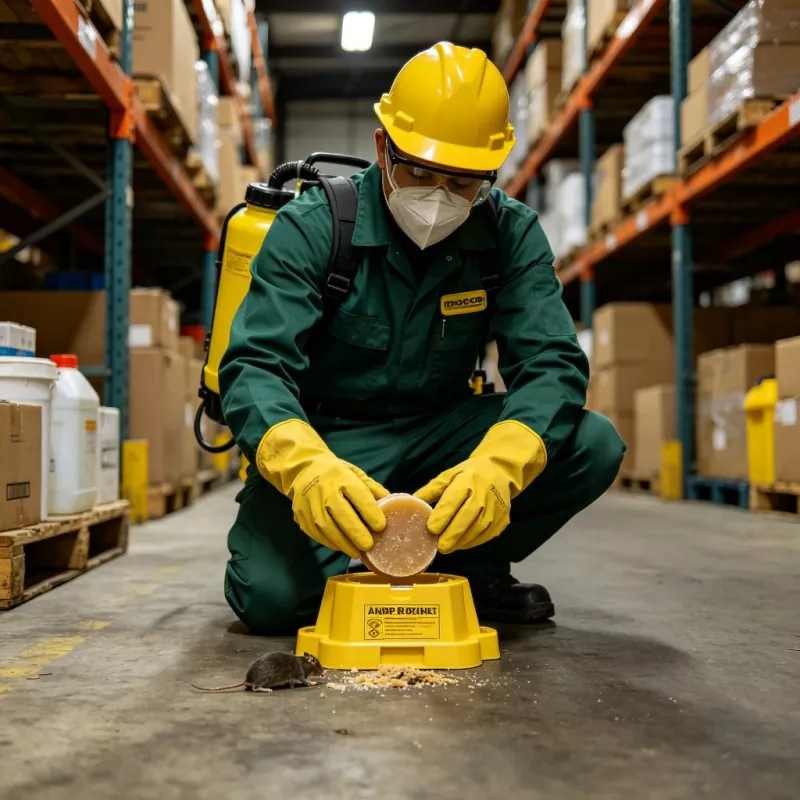
Application is limited to licensed pest control operators and trained professional users. Facility teams should work under a licensed supervisor.
Use inside tamper-resistant stations where local regulation requires it. Fix the block on the rod or screw where the station provides one, so it cannot be dragged out.
Minimum PPE: waterproof gloves, long sleeves, long trousers, shoes and socks. Wash hands and exposed skin after handling and before eating, drinking or smoking.
Keep records of date, location, blocks placed, blocks consumed or removed, and any non-target sightings or dead rodent recovery.
Store locked, away from food, feed and water. Dispose of unused bait and containers through an approved hazardous waste route or according to local requirements.
Safety Data at a Glance
Signal word
Danger / Warning depending on destination label
Hazard statements
Toxic if swallowed; very toxic to aquatic life with long-lasting effects; causes skin and eye irritation; may cause respiratory irritation
If swallowed
Call a poison center or physician immediately. Do not induce vomiting unless instructed.
If on skin
Remove contaminated clothing. Wash with plenty of soap and water.
If in eyes
Rinse cautiously with water for several minutes. Remove contact lenses if easy to do and continue rinsing.
Environmental
Do not release to drains, watercourses or soil. Collect and dispose of spilled blocks.
The SDS ships with each order and should be read before handling. Anticoagulant poisoning may be delayed; medical assessment is required even if the exposed person feels well initially.
Ordering Details
Production site
Dalian Golden-Cat Rodenticide Co., Ltd., Dalian, China
OEM / ODM
Block weight, hole diameter, color, packaging and brand
Minimum order
Negotiable by pack size and destination market
Production schedule
15 to 25 days for standard stock; 30 to 45 days for custom OEM
Loading ports
Shanghai / Ningbo
Incoterms
FOB / CIF / DDP, subject to destination regulatory requirements
Payment
T/T, L/C
Import responsibility
Buyer verifies registration and use approval in the destination country
Buyer Questions
What rod diameter does the center hole fit?
The standard hole suits common station rods and fixing screws. Rod diameters differ between station brands, so check your existing stations before ordering. Custom hole sizes are available for OEM orders.
Can the block be used without a station rod?
It can sit loose inside a station, but the fixing advantage is lost. Where the station has no rod or screw point, a flat or soft block may be the better fit.
Why choose a round block over a rectangular block?
The round shape with a center hole is built around fixing. A rectangular block can also be fixed, but the round format is the common standard for sewer cross rods and stations with a single central mounting point. Where fixing is not needed, a rectangular or oval block is usually cheaper per gram.
Is the 50 g block intended for sewers?
It is used where a station needs a larger bait reserve, including sewers, remote perimeter points and sites with long service intervals. In sewer chambers the block sits above the normal flow line on a horizontal rod.
Does the block soften or swell in standing water?
The wax matrix resists moisture uptake at the surface, but the block is not designed to sit submerged. In sewer chambers it should be mounted above the flow line. Prolonged immersion softens any wax bait block regardless of manufacturer.
How should unused blocks be handled at the end of a program?
Remove them from the stations and dispose of them through an approved route. Leaving brodifacoum blocks in place after the program ends increases non-target exposure and complicates the next rotation.
We use cookies to offer you a better browsing experience, analyze site traffic and personalize content. By using this site, you agree to our use of cookies. Privacy Policy