Products
Extruded Bromadiolone Wax Block Rodenticide Bait
  • Extruded Bromadiolone Wax Block Rodenticide BaitExtruded Bromadiolone Wax Block Rodenticide Bait
  • Extruded Bromadiolone Wax Block Rodenticide BaitExtruded Bromadiolone Wax Block Rodenticide Bait
  • Extruded Bromadiolone Wax Block Rodenticide BaitExtruded Bromadiolone Wax Block Rodenticide Bait

Extruded Bromadiolone Wax Block Rodenticide Bait

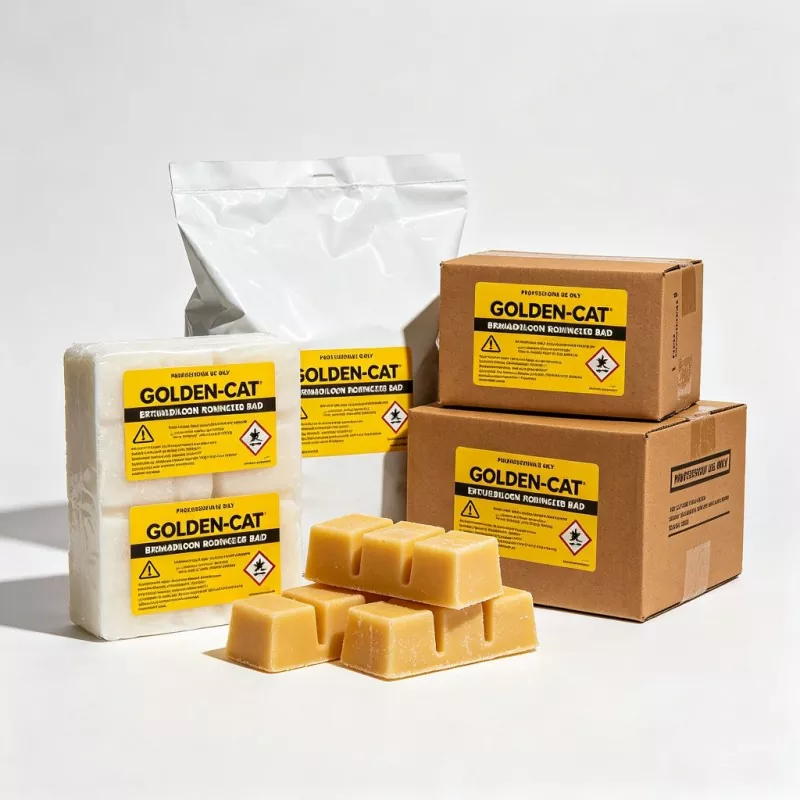
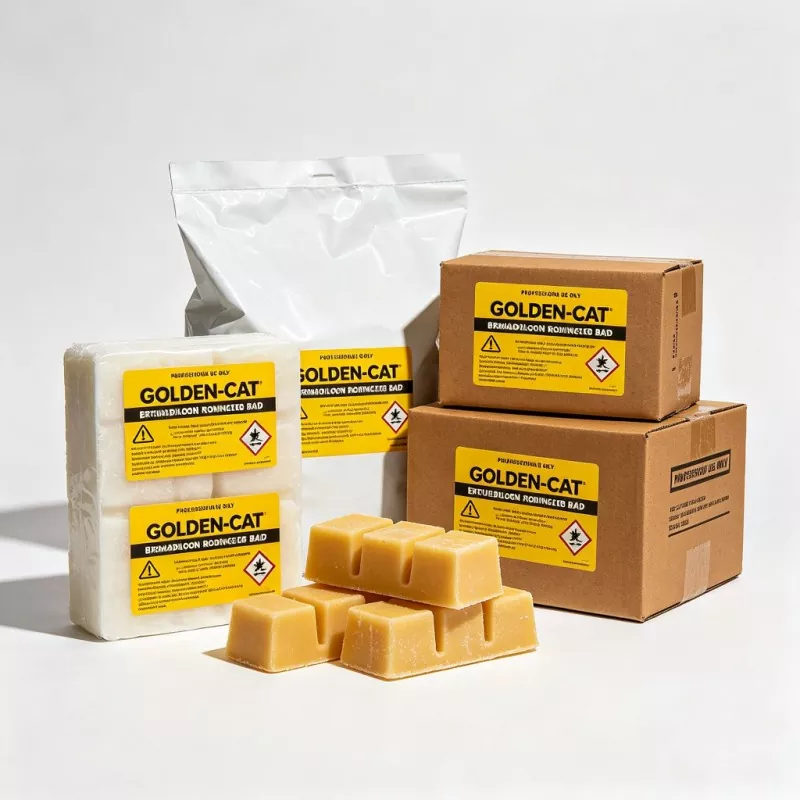
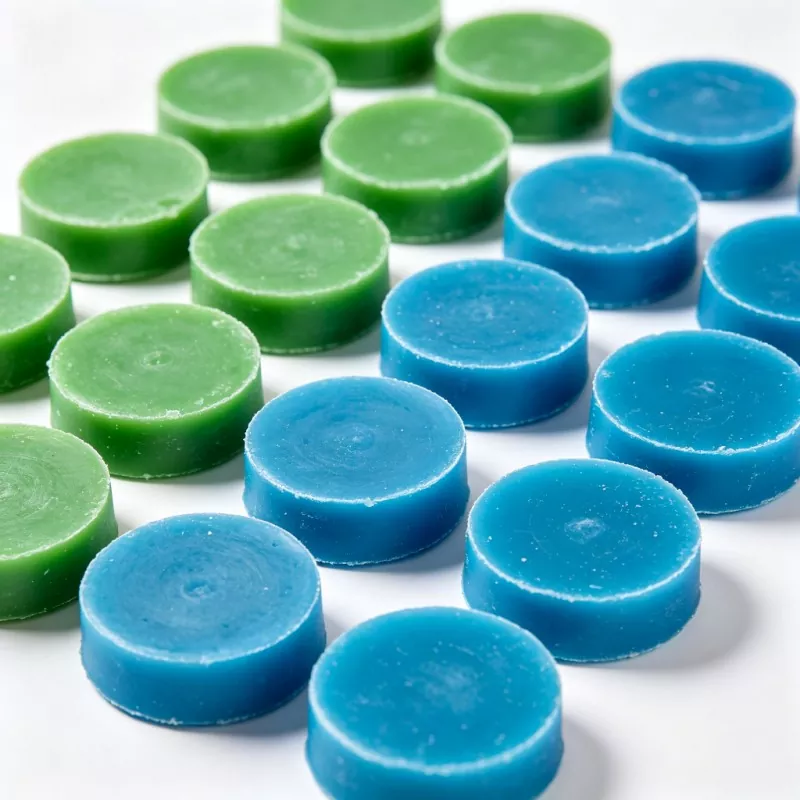
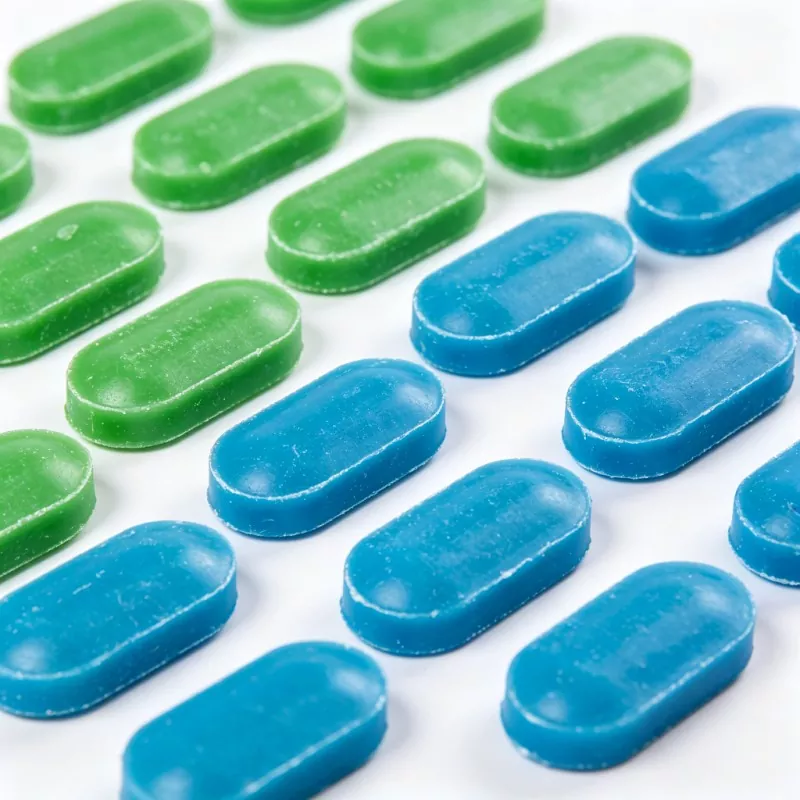
GOLDEN-CAT Extruded Bromadiolone Wax Block Rodenticide Bait is a professional-grade second-generation anticoagulant rodenticide formulated for effective rodent control in commercial, industrial and institutional environments. Manufactured using advanced extrusion technology, this wax block features a dense, uniform texture with grooved surfaces that maximize rodent gnawing activity. The premium bromadiolone active ingredient embedded in a weather-resistant wax matrix provides reliable control of Norway rats, roof rats and house mice — including strains resistant to first-generation anticoagulants.
Rating: 5.0
(Rating Count: 1)

⚠️ IMPORTANT SAFETY NOTICE: This product contains bromadiolone, a second-generation anticoagulant rodenticide. It is for professional use only. Apply only in tamper-resistant bait stations or in locations inaccessible to children, pets and non-target animals. Bromadiolone is toxic to aquatic life with long-lasting effects. Dead and moribund rodents must be searched for and removed during the baiting campaign.

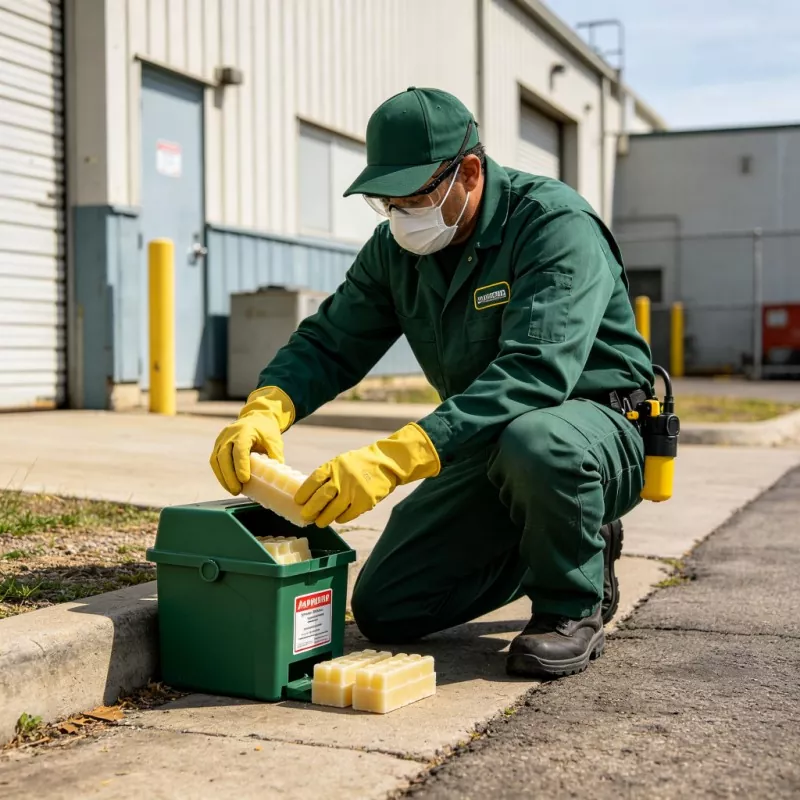
GOLDEN-CAT Extruded Bromadiolone Wax Block Rodenticide Bait is a ready-to-use paraffin wax block with a grooved surface, manufactured by high-pressure extrusion. It is placed in tamper-resistant bait stations in and around buildings, food processing facilities, warehouses and agricultural structures.

The active ingredient is a second-generation anticoagulant with a delayed effect. That delay determines how the block is serviced, how much bait must remain available and how the secondary poisoning risk is managed.

Product Specifications

Brand GOLDEN-CAT
Product Name Extruded Bromadiolone Wax Block Rodenticide Bait
Active Ingredient Bromadiolone. Concentration per label and registration in the destination market.
Rodenticide Class Second-generation anticoagulant, vitamin K antagonist
Formulation Extruded wax block with grooved surface
Manufacturing Process High-pressure extrusion
Bait Matrix Cereal-based food-grade matrix with paraffin wax binder
Block Shape Rectangular or square block with grooved faces; central hole where specified
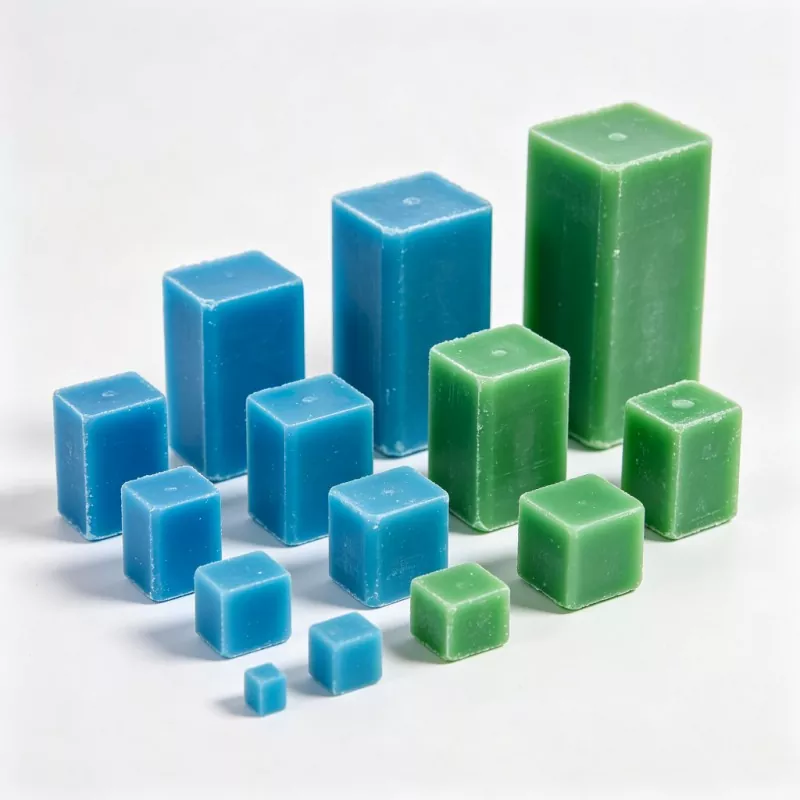
Standard Block Weights 10 g / 15 g / 20 g / 25 g / 50 g per block. Custom weights available.
Target Species Rattus norvegicus (Norway rat); Rattus rattus (roof rat); Mus musculus (house mouse)
Application Method Placement in tamper-resistant bait stations. Do not broadcast.
Packaging Sealed foil bags or pails; heavy-duty outer cartons
Shelf Life 24 months from date of manufacture, sealed, in cool dry storage. Store away from food, feed and water sources.
Available Pack Sizes 500 g / 1 kg / 5 kg / 10 kg. Bulk quantities available.
Quality Documentation ISO 9001 manufacturing; SDS and COA supplied with each order
Regulatory Status Professional use only. Buyer responsible for confirming registration, bait station requirements and import eligibility in the destination market.

Extrusion and the Grooved Surface

Extrusion is not a cosmetic difference from moulded wax. The process forces the bait mixture through a die under pressure, which compacts the material and produces a denser block with a more uniform distribution of active ingredient through the matrix.

Three practical consequences follow from that density.

First, a denser block resists crumbling during transport, storage and station servicing. A block that has broken into fragments in the pail is harder to count, harder to anchor and more likely to be displaced inside the station.

Second, a denser block holds its shape for longer when exposed to moisture and handling. This matters for perimeter baiting, loading docks and damp voids where a softer block would soften or deform.

Third, a uniform matrix reduces the chance that a rodent encounters a section of the block with a lower active ingredient concentration than the rest. Potency consistency across the block is a manufacturing property, and extrusion supports it.

The grooved surface is a separate design choice. Grooves increase the exposed surface area and give the rodent an edge to start gnawing. Rodents are more likely to begin feeding on a textured surface than on a smooth one, particularly when the block is new in the station. The grooves do not change the dose per gram. They change how readily the block is accepted and how quickly gnawing begins.

Mode of Action and the Delay Before Death

Bromadiolone blocks the enzyme that recycles vitamin K in the liver. When this step is blocked, the liver cannot produce functional clotting factors, and the blood loses its ability to clot.

The effect is not immediate. A rodent that has consumed a lethal dose continues to feed and move for several days before symptoms appear. Death usually follows within a week to ten days of ingestion, and animals often die in their burrow or nest rather than in the open.

Two operational consequences follow. A single feeding can be sufficient for control, because the rodent keeps feeding while the anticoagulant effect accumulates. And a rodent that dies above ground or is consumed by a predator before it decomposes creates a route for secondary exposure.

Secondary Poisoning Risk and Exposure Management

Bromadiolone can poison predators and scavengers that consume rodents carrying residues. This is a property of the active ingredient, not a defect of the extrusion process, and it shapes the conditions under which the product is registered in most markets.

Exposure pathway Control measure
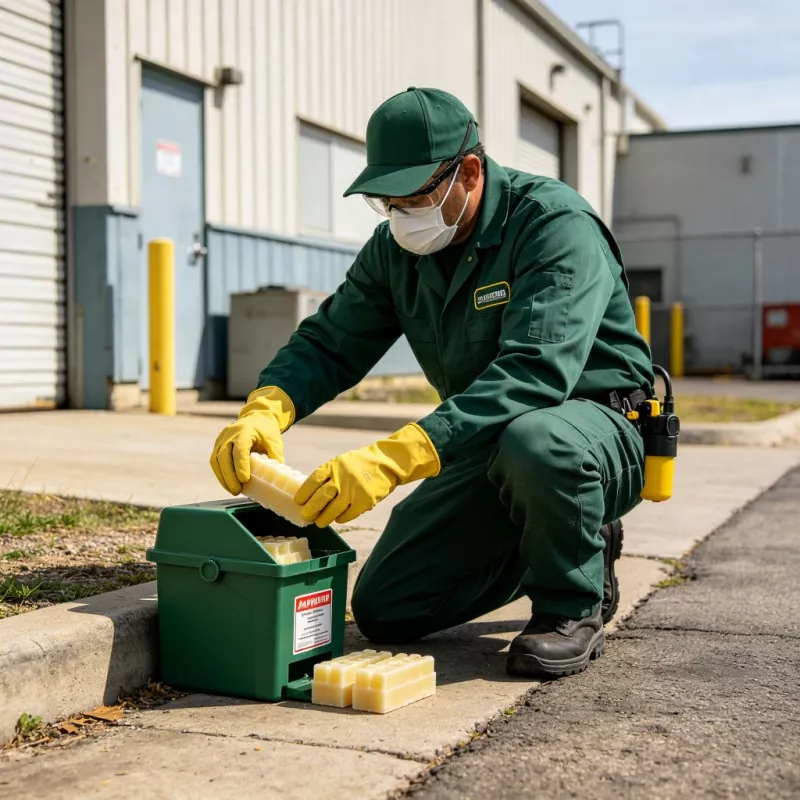
Non-target animals reaching the block directly Use tamper-resistant bait stations. Stations are mandatory for outdoor above-ground use and wherever children, pets, non-target mammals or birds may access the bait.
Predators or scavengers consuming dead or moribund rodents Search for and remove carcasses during the campaign. Wear waterproof gloves when handling carcasses or unused bait.
Prolonged exposure from open-ended baiting Restrict use to treatment campaigns of limited duration. Do not leave bait in place indefinitely after activity has stopped.
Spillage or broadcast application Do not broadcast bait. Place blocks only inside stations or in locations inaccessible to non-target animals.

Keep placements within the distance limit stated on the batch label and away from ventilation duct openings. These limits define the zone in which the product is intended to act and outside which non-target exposure becomes harder to control.

Density, Moisture and Block Weight

The extruded matrix resists moisture penetration better than loose grain or pellet baits. This makes the block more suitable for outdoor perimeter baiting, loading docks, sewer-adjacent areas and humid food processing environments.

Moisture resistance is not the same as suitability for standing water or submerged placement. A block that has been gnawed or cracked can still support mold growth on exposed surfaces. Inspect blocks during each service visit and replace any that have become caked, discolored, soft or covered in debris.

Block weight selection follows target species and station size.

Target Block weight reference Placement note
House mouse 10 g to 15 g blocks, or a larger block broken into smaller pieces where the label permits it. Place stations at close intervals within the infested area. Maintain a constant bait supply until signs of new feeding cease.
Norway rat and roof rat 20 g to 25 g blocks for standard rat stations. 50 g blocks for heavy pressure and large industrial stations. Space stations along runways and harborage edges. Maintain a continuous supply until new feeding signs cease.
General reference 1 to 4 blocks per placement, depending on block weight and rodent pressure. Confirm block quantity and station spacing on the batch label. Requirements differ between registrations.

Intended Users

Licensed pest control operators, professional pest management companies, certified facility management teams, institutional pest control departments and agricultural pest control specialists.

Application Scenarios

Commercial and industrial buildings, food processing facilities, restaurants and food service areas, warehouses and loading docks, institutional buildings, agricultural structures, sewer-adjacent areas, damp voids and perimeter areas within the distance limits stated on the label. Residential multi-unit buildings may be treated only by licensed professionals and only in accordance with the label for that market.

Placement and Service Requirements

· Use tamper-resistant bait stations. Stations are mandatory for outdoor above-ground use and wherever children, pets, non-target mammals or birds may access the bait.

· Do not broadcast bait. Do not place bait near or inside ventilation duct openings.

· Secure blocks inside the station where the station design allows anchoring. A loose block can be displaced by rodents or by station servicing.

· Record the number of blocks placed, the station locations and the quantity consumed at each service visit.

· Search for and remove dead or moribund rodents during the campaign. Wear waterproof gloves when handling carcasses or unused bait.

· Maintain a continuous bait supply for the period stated on the label, or until signs of new feeding cease.

· Follow the label for the batch supplied. Distance limits, station requirements and permitted use sites vary between registrations.

Compliance and Handling

· Read the product label before use. The label is the controlling document for permitted use sites, distance restrictions, station requirements and PPE.

· Wear waterproof gloves, long sleeves, long pants and shoes during handling. Wash hands thoroughly after handling and before eating, drinking or smoking.

· Do not eat, drink or smoke while handling the product.

· Store locked, in the original container, in a cool dry place inaccessible to children and separated from food, feed and water.

· Do not contaminate water, food or feed by storage or disposal. Dispose of unused product and empty containers according to local regulations.

· Do not reuse empty containers.

First Aid

· If swallowed: Call a poison control center or doctor immediately. Have the product container or label available. Do not induce vomiting unless instructed to do so by a poison control center or doctor.

· If on skin or clothing: Remove contaminated clothing. Rinse skin immediately with plenty of water for 15 to 20 minutes. Call a poison control center or doctor for treatment advice.

· If in eyes: Hold the eye open and rinse slowly and gently with water for 15 to 20 minutes. Remove contact lenses after the first 5 minutes, then continue rinsing. Call a poison control center or doctor for treatment advice.

· If inhaled: Move the person to fresh air. If symptoms persist, call a poison control center or doctor.

· Anticoagulant poisoning may require prolonged vitamin K1 therapy. Medical personnel should be informed that the product contains bromadiolone and that the anticoagulant effect can persist.

· Full first aid information is provided in the Safety Data Sheet.

Product Range and Sizes

Block weight Typical use
10 g Mouse stations and confined spaces
15 g General rodent control where a compact block is preferred
20 g Rat stations under standard pressure
25 g Rat stations under heavier pressure
50 g Large industrial and commercial stations
Custom Available against minimum order quantity

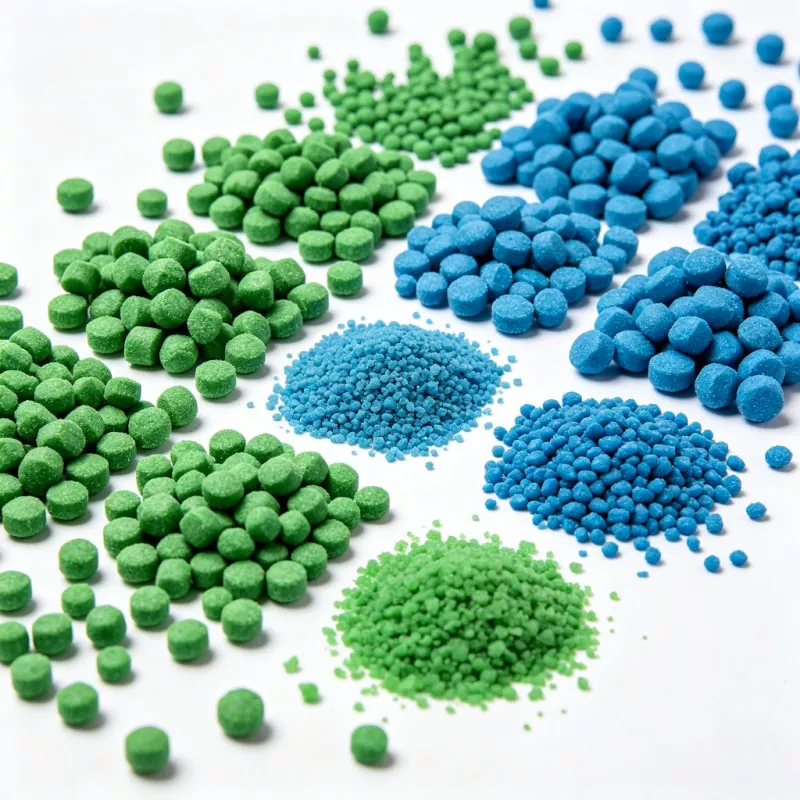
Standard colors are blue and green, with custom colors available for OEM orders. The color is a marker rather than an attractant. It allows applicators and facility staff to identify the block as bait and to distinguish it from food or other materials in the station.

Supply, Packaging and Shipping Information

Standard pack sizes 500 g, 1 kg, 5 kg, 10 kg
Packaging type Sealed foil bags or pails; heavy-duty outer cartons
Master carton Varies by pack size and block weight
MOQ Negotiable for professional clients and distributors
Shipping terms FOB Shanghai, CIF or DDP, subject to regulatory requirements
Payment methods T/T, L/C, Western Union, Trade Assurance
Lead time 15 to 25 days for stock items; 30 to 45 days for custom OEM
Port of loading Shanghai or Ningbo
Documentation SDS, COA and export documentation provided
Regulatory compliance Buyer responsible for verifying local registration, bait station requirements, distance restrictions and import eligibility

Frequently Asked Questions

What does extrusion change compared with a moulded wax block?

High-pressure extrusion compacts the bait mixture and produces a denser block with a more uniform distribution of active ingredient. In practice this means less crumbling during transport and servicing, better shape retention in damp conditions, and greater consistency of potency across the block. The grooved surface is a separate feature that increases exposed surface area and gives rodents an edge to start gnawing.

How much bait does a rodent need to consume?

A single feeding can be sufficient for control, because the anticoagulant effect accumulates over several days while the rodent continues to feed. The exact quantity depends on the body weight of the animal and the concentration of bromadiolone in the block. The applicable label for the batch supplied states the permitted application rate and the quantity to be placed per station. Confirm that rate before placement.

Why does the block have grooves rather than a smooth surface?

Grooves increase exposed surface area and give the rodent a starting edge. Rodents are more likely to begin gnawing on a textured surface than on a smooth one, particularly when the block is new in the station. The grooves do not change the dose per gram. They change how readily the block is accepted.

Can the block be broken to adjust the dose for mice?

Only where the label for the batch supplied permits it. Breaking should be done while wearing waterproof gloves and over a contained surface so that fragments are not scattered. Do not break blocks for rat placements unless the label directs it. A broken block is also harder to anchor inside the station, so check that the fragments remain in place after servicing.

How would an applicator know whether resistance is the cause of a failed treatment?

Resistance cannot be confirmed by observation alone. If a correctly placed, maintained and serviced campaign produces no reduction in activity, check bait quality, station placement, competing food and under-baiting first. If those are excluded and the site has a history of repeated bromadiolone use, resistance becomes a plausible explanation. Rotation to a different active ingredient is then appropriate, based on treatment history and inspection findings rather than a fixed calendar.

What documentation is supplied with an order?

Each shipment is accompanied by a Safety Data Sheet and a Certificate of Analysis for the batch. The SDS covers hazard identification, first aid, handling, storage and disposal. The COA documents active ingredient content for the batch supplied. These documents support the buyer’s hazard communication and quality records. They do not replace the requirement to verify local registration or import eligibility.

Do you offer private label or custom block weights and colors?

Yes. OEM and ODM are available for professional distributors and brand owners. Custom block weights, central hole configurations, groove patterns, colors and packaging formats can be discussed against minimum order quantities. Private label does not transfer the buyer’s responsibility to ensure that the label and claims used in the destination market are compliant with local regulatory requirements, including bait station and distance restrictions.

Send Inquiry
Contact Info
Send your inquiry to Golden Cat for factory price, OEM customization, samples and bulk orders of glue traps, rodenticides and insect bait products.
Rating:
5.0
X
We use cookies to offer you a better browsing experience, analyze site traffic and personalize content. By using this site, you agree to our use of cookies. Privacy Policy
RejectAccept